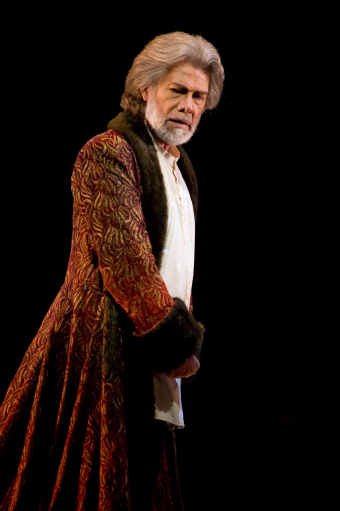
Today is a milestone in the life of bass Samuel Ramey - the operatic legend turns 70 today.
70?! Can you believe it?
Born in Colby, Kansas in 1942, this corn-fed, mid-western gentleman has been bowling over operatic audiences since his debut as Zuniga in Carmen with New York City Opera in 1973. 11 years later, he would make his Metropolitan Opera debut in Handel's Rinaldo in a cast that included Marilyn Horne and Benita Valente.
Since then, Ramey has appeared at the Met hundreds of times in addition to being a returning fixture at houses such as Teatro alla Scala, Covent Garden, Vienna State Opera, the Paris Opera, the Lyric Opera of Chicago and the San Francisco Opera - just to name a few.
Happy Birthday, Mr. Ramey! To celebrate, here are a few fave clips for you:
And finally, a number of years ago, Yours Truly was a 25-year old bass baritone who was faced with the daunting task of learning and performing the role of Rev. Olin Blitch in Carlisle Floyd's Susannah. A voice teacher put me in touch with Mr. Ramey via email and he acted as my own personal "Dear Abbey" as I navigated the treacherous waters of that role. I remain exceedingly grateful.
Here is Mr. Ramey singing the Revival Scene from Carlisle Floyd's Susannah:
Happy 70th Birthday, Samuel Ramey. You remain a cornerstone of opera and an inspiration to many of us who've grown up with your voice in our heads.
Franco Zeffirelli lived there. Liza Minnelli stayed there. Elton John stayed there. Leonard Bernstein stayed there ... even Maria Callas stayed there. If those walls could talk ... the stories they could tell.
Here's the kicker, Chiclets ... now, you can stay there, too.
Italian film and opera director Franco Zeffirelli's palacial villa compound in Positano used to be his playground - but, in 2007 it was purchased by hotelier Giovanni Russo. Russo took great care in restoring the Maestro's private hideaway - and hideaway to the stars - turning it into a 15 suite hotel of grande operatic proportions ... Villa Tre Ville.
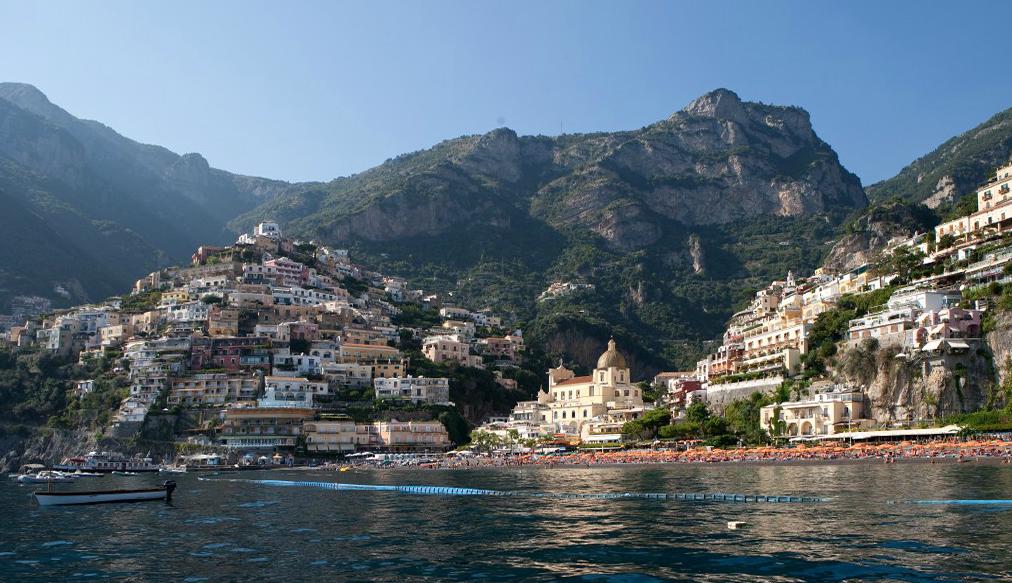
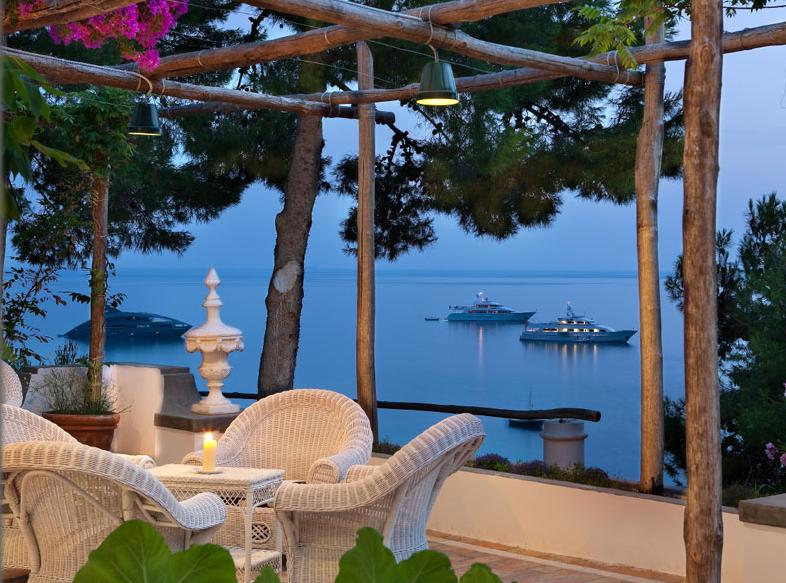
Villa Tre Ville ... positioned on the Amalfi Coast mountainside overlooking Positano, the compound boasts five acres of terraced grounds offering any number of places to relax. A pergola shaded restaurant serves fresh fish and organic produce that is grown right on grounds of the compound. If you're not hungry, that's ok - two scenic lounges are available to guests - along with a secluded pool that can only be reached via an elevator that was cut though the cliff.
Hmmm... where would one stay?
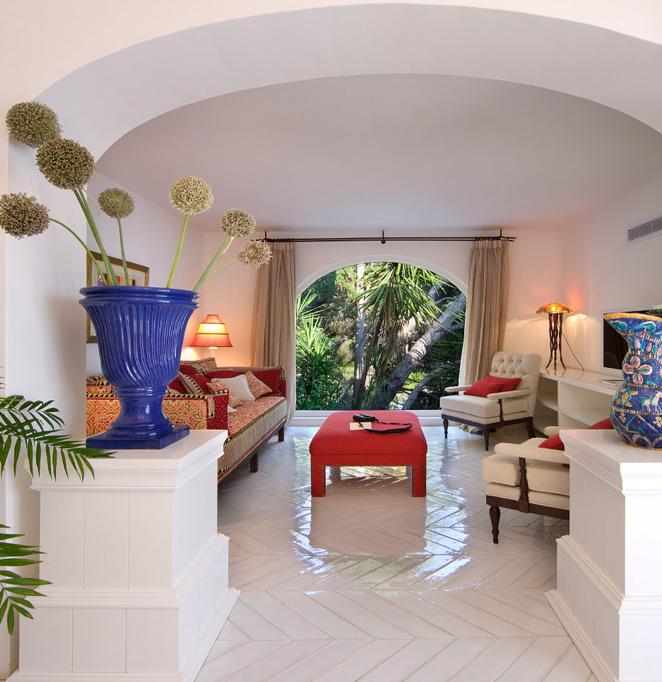
Let's see, in the Villa Tre Pini, you could stay in either the L'Aida, La Turandot, La Carmen, La Norma or Romeo e Giulietta Suites. In Villa Rosa, you could stay in Suite Bernstein or Suite Nijinsky. With spectacular views of the Amalfi Coast, you can't go wrong in any of those.
But, I will say that Yours Truly would most likely be headed for the Villa Bianca. As someone who is obsessed with history and those who've come before us ... I would probably plotz. For, you see, it is in Villa Bianca that you could stay in either the Suite Callas - Tosca or, if you are able to part with $7,680 a night you could stay in Zeffirelli's former residence - Suite Maestro Zeffirelli. As I understand it, the Suite Maestro Zeffirelli still houses a number of his books and personal furniture pieces etc. To me, that's worth the price of admission.
Let's take a little photographic tour, shall we?
Suite Maestro Zeffirelli
Suite Callas - Tosca
The shower in Suite Bernstein was actually converted from an old oven.
One of the many relaxing terraces - complete with hot tub.
Suite Romeo e Giulietta
Suite La Turandot
The view from Villa Tre Ville
It's too much, isn't it? Hmmm - perhaps you're right ... maybe, it's just right.
I'm so pleased right now that I could potentially go from zero to Sally Field in about 60 seconds... But, I know that in order to maintain readership, I must refrain from annoying you too terribly much, dear Chickpeas.
To that end, I will only say one quick (yet, robust) 'thank you' to the blog Operagasm for naming A Liberal's Libretto their Website of the Week.
Mille grazie! Merci beaucoup! Danke schön! And, Děkuji!
So, when I came upon this photo while swirling down the vortex that is Pinterest, and I knew right away that it would be today's installation.
The photo captures soprano Maria Callas, director Luchino Visconti and conductor Leonard Bernstein ... pre-rehearsal - or perhaps post-rehearsal. These three extreme personalities, vibrant talents and incomparable legends in the same photo. It's enough to get my weekend off to a smiling start.
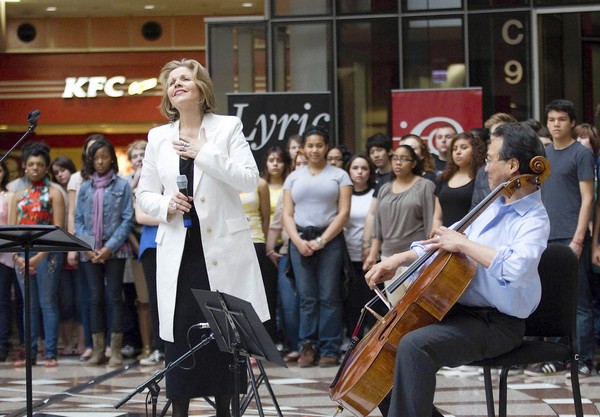
Did you ever think in a zillion years that you'd ever see La Diva Renée singing in a food court?
I mean, she crossed over into the indie-pop-rock scene for a short stint with her album Dark Hope...
Oh my goodness, remember Endlessly? Yep, I was (and, let's be honest, still am) a little obsessed with that single. And then, there was the music video for Endlessly - complete with a bunch of circus-types juggling and what-not. Which, again, I kind of loved.
But seriously, a food court? I mean - yes, she's in good company considering Yo-Yo Ma is accompanying her on the cello. Come on, though ... a food court?
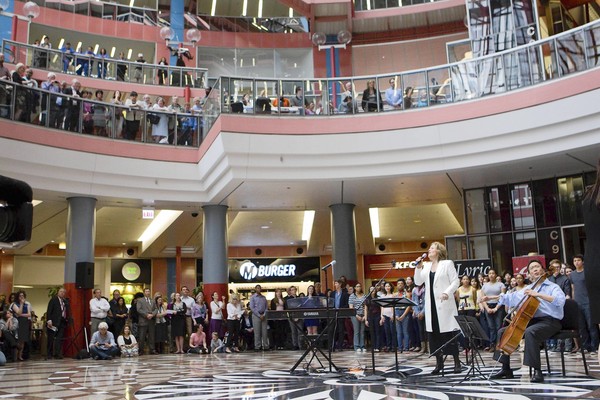
Now I give you that said food court was in the James R. Thompson center - which houses the offices of the State of Illinois - but, the center also boasts an art gallery, artisans shop, three floors of restaurants and shops, and 13 floors of balconies that surround a 160 foot rotunda. So, it's a shopping mall, right?
I'm not going to lie to you - I judged. Sorry! I did. I saw the photos from the event and thought "Wait one-hot-minute ... what in the world is Shenénée doing singing in a shopping mall food court?"
Full disclosure - yes, in my house we *do* refer to Renée Fleming as Shenénée. I'm not really sure why, but we do.
Anyway, this last Monday Renée Fleming, who is currently the creative consultant for the Lyric Opera of Chicago and Yo-Yo Ma, the Chicago Symphony Orchestra’s creative consultant, joined forces for a spectacular event. Celebrating Citizen Musician and the importance of the arts in our daily lives - the surprise performance for more than 500 people, also included the choruses from Lake View High School, Chicago High School for the Arts and the Merit School of Music, along with members of the Chicago Symphony Orchestra.
Citizen Musician, whiched was launched by the Institute for Learning, Access and Training at the Chicago Symphony Orchestra in January 2011, is an organization that calls on all musicians (professional, young, and amateur), music lovers, and music teachers and institutions to use music to bridge gulfs between people, to create community and to inspire and transform lives.
Do you know what is harder for me to believe than Renée Fleming singing in a food court? The fact that someone had to create an organization whose expressed intent is to do that which used to be the norm, rather than the exception: using music to create community and to inspire and transform lives.
Welcome to our current society.
So, I take back my judgment - whole heartedly. How better do you use music to create community, to inspire and to transform lives than to take music directly to the people. To where they eat. To where they do business. To where they live out their daily existence.
Great job, Shenénée La Diva Renée, Yo-Yo Ma and all of those who help Citizen Musician with it's mission. Here's to you continuing to inspire and transform lives!
The Sydney Morning Herald reports today that the opera theatre at the famed Sydney Opera House will be renamed after legendary soprano Dame Joan Sutherland.
The Premier, Barry O'Farrell, met representatives of Opera Australia and the Opera House in the theatre yesterday to announce the decision, which follows discussions with Dame Joan's husband, conductor Richard Bonynge, and the rest of her family.
Mr Bonynge, who is in Spain, said in a statement: "The family are delighted and feel very honoured at the renaming in honour of Dame Joan. It is a splendid day." A naming ceremony for the opera theatre is expected to take place in the second half of this year, subject to the availability of Mr Bonynge and their son, Adam, to attend.
Despite the announcement though, a $1 billion renovation project of the Opera House, with a great deal of focus on the opera theatre, remains stalled in governmental red-tape. Mr O'Farrell said the government had been briefed on a proposal and was - according to the Herald - "working our way through the usual budget processes".
Jonathan Bielski, who is currently the acting chief executive of the Opera House, acknowledges the need of some care and renewal - telling the Herald, "I think we're all committed around the idea. It's a matter of timing, how we structure it and how we put the funds together."
Something tells me that with Dame Joan's name on the theatre, it might get a second look from wealthy donors who want to put their names next to that of a legend.
In the case of our dear-departed copper heiress Huguette Clark - the mysteries just keep popping up.
The latest installment involves a $10 million Degas painting, an art museum in Kansas City and the "H" in H&R Block.
Let's dive right in, shall we?
It appears that about 20 years ago a Degas painting, known as "Danseuse Faisant des Pointes" or "Dancer Making Points," went missing from one of Huguette Clark's three apartments at 907 Fifth Avenue. The circumstances around which the painting went missing are, of course, fuzzy at best. Valuing her privacy more than her possessions, Clark had told her attorney and the FBI not to pursue the loss of the painting, thus maintaining her decades old policy of not doing anything that would generate publicity, even if it cost her a pretty penny. Additionally, Clark refused to list the Degas on the international registry of stolen art.
So, how in the name of Mike did the gorgeous "Danseuse" end up on the living room wall of Henry Bloch, a Kansas art collector better known as the "H" in the tax company H&R Block? (Obviously, the spelling of the last name was adjusted) And, how was he allowed to keep it up there between a Seurat and a Toulouse-Lautrec after the FBI discovered that it was Mr. Bloch who had the stolen painting in his possession? For the answer, we must consult our Huguette Clark guru, Bill Dedman, who reports:
After well-mannered wrangling, Clark and Bloch reached a deal. Clark agreed to donate the painting to an art museum in Kansas City, Mo., the Nelson-Atkins Museum of Art, where Bloch had been a longtime trustee, chairman and benefactor, and where he and his wife had promised to donate all their art when they died. As part of the agreement, the heiress, not America's Tax Man, got the income tax deduction for the gift.
To seal the deal, the ballerina needed to change hands. In October 2008, on a clear but crisp Monday at the Bloch home in Mission Hills, Kansas, a Bloch representative handed the ballerina in the gilded frame to Clark's attorney, who walked out to the car and handed it to a representative of the museum, who then handed it back to the representative of the Blochs, and back on the wall it went. The museum had agreed to lend the painting back to the Blochs, and they will have it as long as they live, renewing the loan every year. Then it will go back to its owner, the Kansas City museum, with the rest of the Bloch collection of Impressionist masterpieces.
The parties signed a confidentiality agreement, keeping the whole business secret even from the staff of the museum. Only three of its 21 trustees were told.
When the museum announced in 2010 the promise by the Blochs to donate 30 Impressionist masterpieces at their death, the Degas dancer was featured in The Kansas City Star newspaper, although the museum at that point had already owned the painting for two years.
Last month, when asked about the ballerina, the museum public relations staff said emphatically that it was not owned by the museum.
Before the transaction was signed, sealed and quite literally, delivered - Huguette Clark made two requests.
Undated photo of copper heiress Huguette Clark
The first was that although Huguette Clark gave the painting without restriction to the Nelson-Atkins museum, in a side letter she asked that her beloved Corcoran Gallery in Washington DC, where a large portion of her father, Senator W.A. Clark's art is on display, should be allowed to borrow the painting up to three times in a 25 year period. If it were shown there, she would receive credit by name. But in Kansas City, the painting is listed as an anonymous gift.
The second request? Huguette Clark asked for, and received, a full-size color photograph of her ballerina.
Couldn't you just weep? She didn't want to fight about it, she just wanted recognition next to her father's paintings and ... oh, just wanted a picture of it.
The extended family claims that in 2005, Wallace Bock, Ms. Clark's attorney and Irving H. Kamsler, her accountant used their influence to persuade the then 98 year-old to change her Will - only six weeks after her original Will was signed. The second Will was more detailed: it excluded her extended family, it made plans for an art museum at Bellosguardo, her seaside mansion in Santa Barbara, California, it left about $36 million to her long time companion and nurse, it bequeathed a $40 million Monet to the Corcoran Gallery of Art in Washington, D.C., and also provided substantial gifts to a godchild, her doctor, her attorney, her accountant and others. The extended family's lawsuit also claims that perhaps Huguette Clark was not of sound mind when the change was executed.
There was one more hitch, which could play a large role in the court fight now beginning over Huguette Clark's $400 million estate. The museum would not accept the gift from the centenarian, particularly one whom they couldn't meet, unless Clark provided a doctor's statement affirming she was competent to make the gift.
On Oct. 10, 2008, Clark's longtime physician signed a sworn statement. The affidavit by internist Dr. Henry S. Singman began by explaining that he was semi-retired, and had only the one patient.
"I am and have been personal physician to Madame Clark, who resides at 907 Fifth Avenue, New York, New York, since 1991. As such, and because of her advanced age, I visit her on an almost daily basis."
He said he had seen her just the day before. "At that time, and on all previous visits, I found her, although slightly hard of hearing, to be mentally and physically alert, able to read and comprehend written and printed material as well as verbal communications, competent to understand and execute documents and to sign her name thereto without assistance."
That changes things just a bit, doesn't it?
Now, on to some exciting news: our Huguette Clark guru, Bill Dedman is penning a book about the heiress and her family. Can you even believe it? I couldn't either ... until I read about it here. Can't wait.
Finally, here is a video companion to the Degas Debacle.
Alright, I'm going to come clean with all of you - so, fasten your seat belts ... Yours Truly does not own an iPad.
I know. I know. How can one call themselves a blogger in this day-and-age without owning an iPad?
What's worse? (Yes, it gets worse) I don't even have an iPhone. I walk around New York trying to conduct my life on a BlackBerry. When I had the chance to get an iPhone a year and a half ago, I chose not to. I mistakenly thought "Meh, I don't need all of that... straight forward function. THAT'S what I need." I definitely subscribed to the notion highlighted in the latest BlackBerry TV spots "for those who need tools, not toys."
I was so wrong.
So, now I'm stuck waiting until October when my inane and nearly useless AT&T contract / BlackBerry comes up for renewal. Le Sigh. It's a long time until October. No iPhone, no iPad - I feel like I'm standing still while everyone else races past me on the social media race track.
Well, just like rubbing some salted lemon juice in an open flesh wound, the Met has released a brand new iPad app - Met Opera on Demand. The app allows unlimited streaming access to video transmissions from the Met’s Live in HD series [yawn], plus hundreds of historic TV and radio broadcasts. Yes, you read it correctly - no need to adjust your glasses - plus hundreds of historic TV and radio broadcasts.
iPad Screenshot of Met Opera on Demand
The free app, available for download from the App Store, will give opera fans around the world mobile access to high-quality audio and video streams of hundreds of performances from the Met’s 81-year broadcast history. New content will be added monthly, including recent Live in HD transmissions featuring the well known singers of today’s opera world. Live in HD titles will be added to the service two to three months after their premiere in movie theaters.
A subscription is required to access streaming content, with plans beginning at $14.99 a month.
In it's initial offering, 44 selections will be available from the company’s Live in HD series, including the behind-the-scenes intermission features. The streaming service also allows users access to historic telecasts featuring stars like Luciano Pavarotti, Plácido Domingo, Joan Sutherland, and Leontyne Price. The video library includes historic performances, such as a 1979 production of Don Pasquale starring Beverly Sills or a 1998 Le Nozze di Figaro telecast starring Renée Fleming, Cecilia Bartoli, and Bryn Terfel. All videos include English subtitles and many offer alternate titles in French, German, Italian, Portuguese, Russian, and Spanish.
Also, for those of us who realize that in order to know where we're going, we have to know where we've come from ... More than 250 audio performances from Met history are available through the Met Opera on Demand app. Digitally remastered audio streams, beginning with a 1936 performance of Wagner’s Götterdämmerung, starring Lauritz Melchior, are available.
And get this, Chickpeas... The Met Opera on Demand app includes social sharing capabilities for Facebook and Twitter and provides users with the ability to create favorites lists.
So basically, it's done - I now have to breakdown and figure out a way to get my hands on an iPad. More to come...
More on our favorite heiress... Last week, we reported that Huguette Clark's massive real estate holdings at 907 Fifth Avenue were put on the market. Fetching a possible $55 million, the three apartments figure out to be some 17,000 square feet of prime Manhattan real estate. Although Clark had not been living in the apartments, they remained fully furnished with furniture, priceless musical instruments, paintings by the likes of Monet and van Gogh plus, of course, Clarks huge collection of French and Japanese dolls.
Clark spent the last 20 years of her life in a secluded hospital room - admitted under an alias. During her absence though, the apartments were meticulously maintained by Clark's staff - many of whose families had served Clark and/or her mother Anna for generations. Some of the staff that maintains Bellosguardo, her seaside mansion in Santa Barbara, California, say they had never saw the heiress. Even during her last visits to Bellosguardo, only a select few members of her staff were allowed to see her. Others were kept away.
So mysterious ... hmmmm.
Well, another update: it appears that real estate holdings aren't the only items belonging to Huguette Clark that are going on sale. Christie's has announced the sale of millions of dollars of jewelry discovered in Huguette Clark's bank vault. The jewels, which were locked away for more than seven decades, will go on auction at Christie's New York on April 17.
Before her self-imposed seclusion in 1930, Clark was pictured wearing several of the pieces, including the photo at the right where she is wearing two Cartier diamond bracelets resembling the two pieces from her collection that are pictured below. This photo of Clark was snapped just after she signed her divorce papers in Reno, Nev., following the breakdown of her two-year marriage.
Also being sold is and art deco crystal clock, left, is valued at $15,000-$20,000. And one of the more personal items is an onyx, turquoise and diamond frame containing a picture of Clark's sister Andree, who died of meningitis just before her 17th birthday, in 1919. Many speculate that it was Andree's death - the two sisters were incredibly close - that sparked a possible germ phobia in Huguette ... ultimately leading to her seclusion.
There are other items - the priciest of which is a rare pink cushion-cut 9-carat diamond ring valued somewhere in the neighborhood of $6 and $8 million. Christie’s believes that it may have been passed down to Clark by her mother, Anna. How's that for a gift?
Rahul Kadakia, head of jewelry for Christie's, told the TODAY Show, "To have this collection of jewels from the gilded age is going to be fabulous at auction. It's one of the best periods of jewelry manufacturing."
This sale has historians and obsessives (like Yours Truly) waiting on the edge of our seats - hoping that the auction will give the public a peek into Clark’s vast personal estate and maybe even yield some clues as to why she disappeared from society and remained secluded for the majority of her life.
Below is a video clip from the TODAY Show segment:
The Metropolitan Opera today announced the names of nine finalists who will sing in the 2012 National Council Auditions Grand Finals Concert on March 18 at 3:00 p.m. with the MET Orchestra conducted by Andrew Davis.
The finalists are: Janai Brugger, soprano from Darien, IL; Anthony Clark Evans, baritone from Owensboro, KY; Matthew Grills, tenor from Newton, CT; Will Liverman, baritone from Virginia Beach, VA; Margaret Mezzacappa, mezzo-soprano from Euclid, OH; Andrey Nemzer, countertenor from Moscow, Russia; Kevin Ray, baritone from Cornwall, NY; Lauren Snouffer, soprano from Austin, TX; and Michael Sumuel, bass-baritone from Odessa, TX.
Bass-baritone Eric Owens, a past National Council Auditions winner, will host the concert and perform during the judges’s deliberations once the auditions part of the program is over.
The finalists, between the ages of 20 and 30 years old, will be competing for individual cash prizes of $15,000 each at the Grand Finals Concert. Even more important than the prize money is the contestants’ opportunity to perform with the Metropolitan Opera Orchestra on the historic opera house stage before an audience that will include opera company executives, artist managers, music critics, and other opinion-makers of the music world. They were chosen from nearly 1500 singers who participated in the auditions held in 41 districts and 14 regions throughout the United States and Canada, sponsored by the Metropolitan Opera National Council. Given the reach of the auditions, the number of applicants, and the long tradition associated with them, the Metropolitan Opera National Council Auditions are considered the most prestigious in North America for singers seeking to launch an operatic career. Some winners are invited to join the Metropolitan Opera Lindemann Young Artist Development Program.
Past winners of the Met Auditions include many of today’s leading operatic artists such as Renée Fleming, Hei-Kyung Hong, Angela Meade, Susanna Phillips, Sondra Radvanovsky, Deborah Voigt, Susan Graham, Stephanie Blythe, Dolora Zajick, Nathan Gunn, Lawrence Brownlee, Thomas Hampson and Samuel Ramey. During a typical opera season, over one hundred alumni of the Auditions are on the Met roster.
The Grand Finals Concert on Sunday, March 18 at 3 p.m. is open to the public. If you haven't attended the Met Auditions previously, I highly recommend it. Tickets from $20 to $115 are available at the Met Box Office, by phone at 212-362-6000, or at the Met’s web site.
When we last discussed her, we were trudging through the ins-and-outs of her Last Will and Testament and whether or not Wallace Bock, Ms. Clark's attorney and Irving H. Kamsler, her accountant (and known felon), could be trusted. The two had been under investigation from the get-go for potentially miss-handling Huguette Clark's finances and recently, Manhattan Surrogate’s Court Judge Kristin Booth Glen did rule that Bock and Kamsler were “unfit to serve”. Judge Booth Glen suspended them from administrating Huguette Clark’s affairs. Clark’s extremely distant relatives are still challenging her will, claiming fraud - not only by Bock, Kamsler - but, also by her nurse and confidant Hadassah Peri.
But wait ... there's more ...
As we've discussed previously, for the past two decades, almost 17,000 square feet of prime real estate on Manhattan's Fifth Avenue have sat fully furnished with furniture, priceless musical instruments, paintings by the likes of Monet and van Gogh plus, of course, Clarks huge collection of French and Japanese dolls. But, the apartments remained empty.
Clark spent the last 20 years of her life in a secluded hospital room - admitted under an alias. During her absence, the three colossal apartments at 907 Fifth Avenue have been meticulously maintained by Clark's staff - many of whose families had served Clark and/or her mother Anna for generations. Some of the staff that maintains Bellosguardo, her seaside mansion in Santa Barbara, California, say they had never seen the heiress. Even during her last visits, only a select few members of her staff were allowed to see her. Others were kept away.
It is also clear that Clark never stepped foot into the 12,766-square-foot Connecticut country house she bought in 1951 - which she called "the Bomb Shelter". The 52-acre "Bomb Shelter" estate - which is currently on the market for $24 million - was to be the place to which Huguette Clark would have relocated should there be any national security issues (like Nuclear War ... hence the name). It is evident that she indeed lived in ultimate seclusion - and, planned to remain in seclusion.
Well the time has come for you to get out those checkbooks, kids ... the apartments at 907 Fifth Avenue are finally going on the market. The NY Post reports that the properties will officially be on the market with Brown Harris Stevens broker Mary Rutherfurd. (UPDATE BELOW)
Yours Truly had originally reported that the property that Clark owned at 907 Fifth was the entire 12th floor and half of the 8th floor. As it turns out, Clark and her mother Anna had moved into the 28 room, 12th floor unit [pictured right] after Clarks father, Senator and copper baron William Andrews Clark, died. When Huguette married in the 1920's Anna rented an apartment on the 8th floor - at which point the 12th floor unit was subdivided into two separate apartments.
Two years later when Huguette divorced her husband and came home, Anna's half of the 8th floor was deemed to small for both Huguette and herself. So, the Ladies Clark ended up renting both apartments on the 8th floor and half of the 12th floor (there other half of the 12th floor was occupied). When 907 Fifth Avenue went co-op in the 1950s, the Ladies Clark purchased the three spaces they were renting.
Industry insiders say that eighth-floor apartments could fetch between $20 million and $35 million total - while the 12th floor apartment could have an initial price tag of around $25 million. That is some serious cash.
Building permit records show virtually nothing has been done in Clark's 3 apartments. So, it is assumed that behind the locked doors, Huguette Clark's dwellings have remained perfectly preserved, dolls and all, for some 70-80 years, at least. That leaves a hefty challenge (and added price tag) to whomever buys the apartments - especially if they plan to modernize the kitchens and baths, add central air etc.
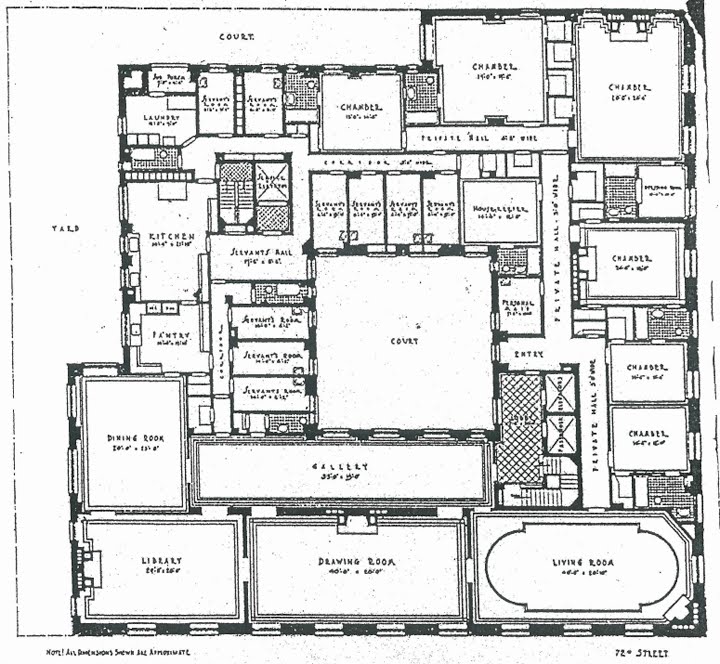
The Real Deal went behind the long-locked doors at 907 Fifth Avenue - virtually speaking, of course - and examined original floor plans to find out what lies behind them. Click on the image below for a closer look at what they uncovered:
-- UPDATE --
Just as I was publishing my post, the listings for Huguette Clark's apartments went live on the Brown Harris Stevens website.
The other day, I caught part of the groundbreaking ceremony of the National Museum of African American History and Culture building at the Smithsonian. Streamed online, I wanted to make sure to catch it because I saw on Twitter that Thomas Hampson would be singing... little did I know that Ms. Denyce Graves (Montgomery) would also be lending her voice...
It got me thinking: Ms. Denyce ... where've you been hiding?
It seemed like the in the late '90s and early '00s, Denyce Graves was everywhere ... and then, it seemed that she - well - she fell off the Mainstream Operatic Radar. So, given that today is her 48th birthday, I decided to do some research on her life and career.
It turns out that Denyce Graves' stellar career, almost wasn't. After attending the Duke Ellington School for the Performing Arts high school in her native Washington DC, Graves went off to study with renowned voice teacher, Helen Hodam, first at Oberlin Conservatory and then, at the New England Conservatory (NEC). While in Boston at NEC, she took side jobs to support herself: cleaning dorms, working as an all-night hotel desk clerk. When she decided to enter the Metropolitan Opera Regional Auditions, she had all the makings of a finalist: a generous and richly luminous mezzo-soprano voice and a gorgeous stage presence. But, her performance was charged with a special determination. As the story goes, she was four months behind in her rent and couldn't even pay for the rented dress she was wearing.
Needless to say, she won.
After the competition though, her voice failed her. The problem later turned out to be a treatable thyroid condition. But her performance at the finals in New York City was an absolute disaster. Crippled by that experience, she quit singing and became a secretary.
Yet the word of this young African-American mezzo-soprano spread and it wasn't long before Graves received a phone call that would change her career - and life. Houston Grand Opera called to invite her to participate in its young artist program. She declined. When they called twice more, she accepted.
Thus began a career straight out of the Book of Operatic Fairy-tales: She was performing more than 150 times a year with conductors like Riccardo Chailly, Christoph Eschenbach, James Levine, Zubin Mehta, Lorin Maazel, Kurt Masur, Riccardo Muti, and Mstislav Rostropovich - on the stages of companies such as the Metropolitan Opera, Los Angeles Opera, Covent Garden, Washington National Opera, Houston Grand Opera, San Francisco Opera, Michigan Opera Theater, Cincinnati Opera, Opera Carolina, Opera Company of Philadelphia, Dallas Opera, Vienna Staatsoper, La Scala Milan, Grand Théâtre de Genève, Genoa’s Teatro Carlo Felice and Opernhaus Zürich... In fact, when Oxford University Press in London published a history of the opera, they put her picture -- and hers alone -- on the cover.
With a grand career such as this, Graves was on top of the world, right? Not so...
In 2000, Graves' personal life had begun to unravel. She had always suffered from severe headaches but, now they had become so severe that they were causing her to black out. Again, crippling self-doubt set in. Also, weighing heavily on the star was the fact that she so-badly wanted to have children - she had 4 surgeries to try help her - but, was ultimately told it wouldn't happen for her. She finally broke down in the fall of 2000.
Both Graves' mother and best friend received distressing phone calls from her: "I need you to come and I need you to come now." Stuck in a hotel room in Chicago, Denyce Graves was having a breakdown. This was something so deeply personal, that she hid it from everyone - including her then-husband, David Perry. But, the show had to go on.
Her headaches continued and their ferocity grew - she was being given cortisone injections every night and continued performing until one night while performing with Opera Delaware. Graves sang the first Act and then, during the intermission, sneezed and suddenly .... there was no voice. Denyce Graves had a hemorrhage on one of her vocal cords - which, as per usual, was created by a polyp on the opposite cord.
Her doctor's name, Dr. Steven Zeitels, probably sounds familiar to some of you who frequent this blog. He is the surgeon who recently operated on singer Adele. But, let's remember that 12 years ago, it was an absolute taboo for opera singers to have vocal surgery. And, if you did go and see Dr. Zeitels, you kept it secret for fear that you'd be considered "tainted goods".
After her period of silence and rehabilitation, Denyce Graves was just coming back to full voice when she received another call that would change her life and career. Shortly after September 11, 2001, she was called upon by our President to help comfort a grieving nation by singing at the National Service of Prayer and Remembrance. Here is part of that service:
She had barely stepped foot out of the cathedral that day when her cell phone started ringing. Former president Bill Clinton called her to personally thank her, Oprah Winfrey wanted her on her show and so did Larry King. Even NASCAR booked her for an upcoming event.
But, her silent battles raged on ... her marriage was falling apart. Graves and David Perry divorced shortly thereafter. Even though they remained friends and business partners as well, the dissolving of the marriage let to bouts of depression.
Graves then saw a ray of light - she fell in love with Vincent Thomas, a French composer who often accompanied her in concerts on the clarinet. And, despite what doctors had told her was impossible, she became pregnant. In 2004, during a performance in Europe, Graves began bleeding. After being rushed to the hospital, there was only one solution, her baby would have to be delivered via emergency c-section. And so, little baby Ella was born (named after Ella Fitzgerald, of course).
In 2006, Graves met Robert Montgomery, a Johns Hopkins doctor, on an airplane from Dulles Airport to Paris. They were married on June 29, 2009, in a family-only affair. In August of that year, the couple traveled to Kenya for a tradition Maasai blessing and in September, they had a five-day wedding celebration that featured a kick-off party in a private airplane hangar, a private dinner at their home, a reception at the Anderson House in Dupont Circle, and a day-after picnic on the grounds of Duke Ellington High School. The September event was covered by People Magazine.
It should be noted that Dr. Montgomery is now the Chief of Transplant Surgery at Johns Hopkins Medical Center.
As for Denyce Graves-Montgomery, she is still singing of course - although it doesn't seem that many staged operas are present on her books. In addition, her website shows a place for people to register for voice lessons with the famed mezzo-soprano - when you click on it, you see "Details will be be shared very soon! Check back for updates." Indeed, I will.
So ... what a story, huh? Happy Birthday, Denyce Graves-Montgomery! I'm sure I speak for many when I say that I wish you continued happiness and much success.
Now to celebration portion of this post ... here are a couple of my favorite performances by one of the fiercest divas around:
So, you may have seen that the incomparable Sondra Radvanovsky was a last minute replacement in the Met's Aida this last Tuesday night - replacing an ill Violeta Urmana. It was Radvanovsky's first Aida at the Met. She sang the Verdi masterpiece for the first time at Toronto's Canadian Opera Company in October 2010 and repeated the role in January and in early February at the Lyric Opera of Chicago.
There was quite a bit of discussion in the blogosphere regarding this upcoming Saturday's performance - as it will be broadcast live over the Toll Brothers-Metropolitan Opera International Radio Network and on Metropolitan Opera Radio on Sirius XM.
Would Urmana be well enough to go on? Would Radvanovsky have to do it?
Well, we found out this morning that neither soprano will be singing the role of the Egyptian slave this Saturday. Soprano Latonia Moore will make her Met debut as Verdi’s Aida in the March 3 matinee performance.
Moore was a winner of the Met’s National Council Auditions in 2000. She sang Aida last season at the Royal Opera, Covent Garden and the Hamburg State Opera. In recent seasons, she has sung Lucrezia in Verdi’s I Due Foscari at the Teatro Verdi in Trieste and the Bilbao Opera; the title role in Floyd’s Susannah and Micaëla in Bizet’s Carmen at the Bilbao Opera; the title role in Puccini’s Madama Butterfly and Amelia in Verdi’s Un Ballo in Maschera at Hamburg State Opera; Desdemona in Verdi’s Otello at Charlotte Opera; and Liù in Puccini’s Turandot at the Royal Opera, Covent Garden.
How's this for a Met debut? Conducted by Marco Armiliato, Aida also stars Stephanie Blythe as Amneris, Marcello Giordani as Radamès, Lado Ataneli as Amonasro, James Morris as Ramfis, and Jordan Bisch as the King. AND, it's being broadcast live on the radio network...