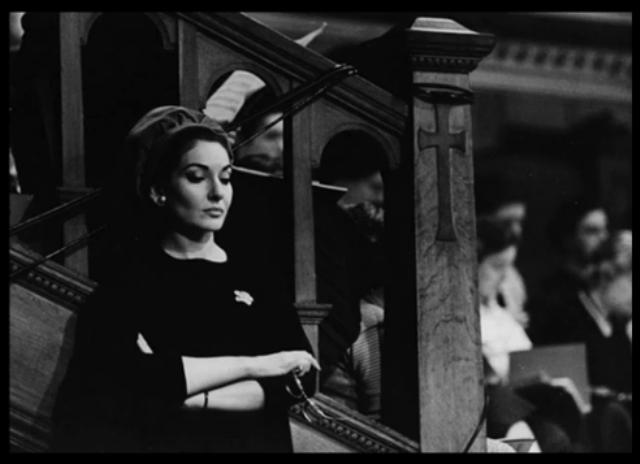
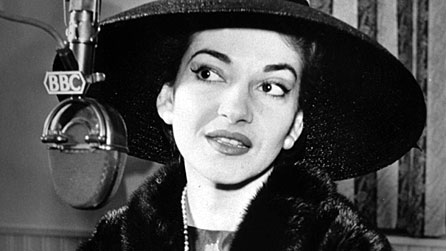
In honor of her 94th birthday, I have to revisit this clip of La Divina — because it’s phenomenal.
So, do you ever think about what someone like Maria Callas did on stage when the wheels started coming off the musical bus? I know I do. Well, if you're a YouTube-geek, like I am (and you know you are), you may have already seen this clip. If so, it's worth another look - for sure. If you've not seen it ... trust me, you'll find much pleasure in this week's Another Favorite Clip.
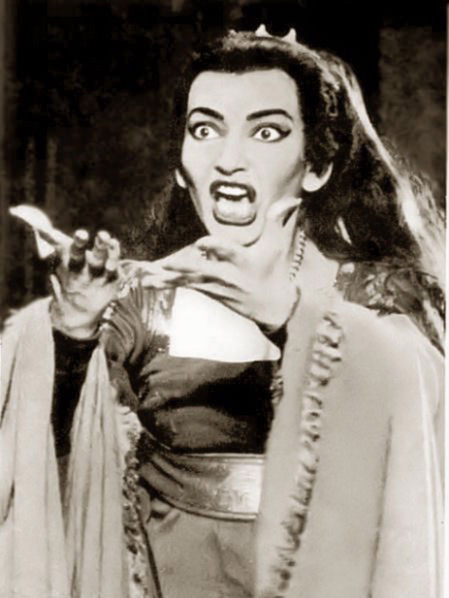
In this vintage-1958 Callas clip, we see La Divina hauling out another "Casta Diva" from Bellini's Norma. Only this time, when the chorus comes in part way through the first half, they begin singing a little late and while some try to catch up, others dig their feet in. What we're left with is a diva, center stage, flanked by a chorus that is singing out of sync.
La Divina is having NONE of that. As she joins the choir (approx the 1:57 mark), she holds up her hand in order to tell them to cease .... perfection. It doesn't just stop there, though. Shortly thereafter, she cues the choir to come in at the proper spot by tilting her head back slightly. Yes. She. Does.
Just when you think she's done ...
As soon as everyone gets back in sync with each other, she gives a look to stage left - I'm assuming the look is toward the offending party - and gives whomever she's looking at a *serious* up/down.
You think I'm joking? Have a look ... and, enjoy! I know I did.
Known in the opera world as La Divina, Maria Callas - some say opera's most celebrated and famous soprano - would have turned 90 years old today. To honor her, Google dedicated today's "Doodle" to her birthday:
What does it mean to be a 'Diva'? Over the last few decades the term has gone from being one of unbridled admiration to being another way to say "cantankerous, unprofessional b*tch".
In our great world of opera, the term 'Diva' has become truly synonymous with two names: Maria Callas and Angela Gheorghiu.
Common opera folks, back me up. Am I right, or what?
Trust me, Chiclets: I don't think Gheorghiu minds being paired with Callas ... in fact, it seems that she (or her PR folks) have designed it that way.
As you may remember, late last year soprano Angela Gheorghiu (aka: Mrs. Roberto Alagna ... yes, they're still married.), released Homage to Maria Callas - Favourite Opera Arias- a collection of beloved French and Italian operatic masterpieces - apparently inspired by the career and recordings of Maria Callas.
In discussing her 'homage' to Callas, Gheorghiu - who, it seems, has fancied herself as the next Callas for quite some time - says:
Callas was original in everything she did; she was a phenomenon. In every performance she gave her all. She was the most wonderful painter and you can always hear exactly the right color in her voice. Just hearing her sound, you understand all the power or fragility of her emotions. That's a rare talent and a great gift ... EMI was her record label and it's mine too. It feels like a family.
I'm afraid that's right where the "family feel" stops ... that is to say: diehard Callas' fans have not been so quick to embrace Gheorghiu's self-coronation as the next La Divina.
Shortly after the release, Michael White of The Telegraph blogged about his experience at the party celebrating EMI's latest ploy to make money off of Callas' name the launch of Homage to Maria Callas.
A depressing evening last night at the Ivy where EMI were hosting a party for Angela Gheorghiu and her new CD ...
... Most depressing was the rictus-grinning phoniness of the whole thing, as EMI staff fawned over the diva, choked with laughter at her least remarkable remarks, and smothered her with flattery so absurd she should have been offended by it – as any self-respecting artist of integrity could only be. It felt like people humouring a madwoman.
Underneath it all was the sense of desperation that is presumably endemic at EMI these days. Commercially, artistically, this once great company seems to have lost its way. Its modest presence in the recent Gramophone Awards was thanks entirely to Antonio Pappano. The rest of its catalogue doesn't appear to be doing much of interest. And as for this new release, it plants Gheorghiu on dangerous ground – particularly as it comes with a promotional video that splices and superimposes performances of Callas and Gheorghiu singing the same aria from Carmen and making the clear suggestion that they're artists of equal, interchangeable calibre.
That Gheorghiu is a singer of outstanding qualities I don't dispute. But Callas she is not.
One thing that Gheorghiu does have in common with Callas is her propensity for difficult relationships with opera house managements and directors. Some, but not all, of them have stemmed from her opposition to directors who, as she put it in an interview with ABC "want to express their own fantasies, forgetting about the characters. At times ... what they put on stage goes against both the story and the music."
This sounds very similar to an argument between Callas and Sir Rudolf Bing - who was the general manager at the Met during Callas' operatic-reign. Yes, THAT argument... the one that got her fired from the Met.
Gheorghiu's problematic behavior started to become public knowledge back in 1996 when she was cast as Micaela in the Met's new Franco Zeffirelli production of Carmen Singing opposite Waltraud Meier's Carmen and Plácido Domingo's Don Jose, Zeffirelli's vision of the young Micaela called for Gheorghiu to wear a blonde wig, which she adamantly disliked. When the Met toured the production in Japan in 1997, she refused to wear it on the first night to which Joseph Volpe (then, the general manager) famously declared, "The wig is going on, with you or without you". Needless to say, Gheorghiu was replaced by her cover.
She appeared at the Met again in 1998 for six performances of Roméo et Juliette with her husband, Roberto Alagna, as Roméo.
Volpe had planned to engage Gheorghiu as Violetta for a new production of La Traviata, which was to premiere in November 1998 - also directed by Zeffirelli. Alagna was to sing the role of Violetta's lover, Alfredo Germont. According to Volpe, Gheorghiu and Alagna argued with the staff and the director over production details and continually delayed signing the contract. They eventually signed their contracts, and faxed them to the Met one day past their deadline. Volpe refused to accept them. The production opened with Patricia Racette and Marcelo Álvarez as the lovers.
And, her problems were not just at the Met.
In September 2007, Gheorghiu was fired from the Lyric Opera of Chicago's production of La Bohème for missing rehearsals costume fittings, and generally "unprofessional" behavior. Gheorghiu said in a statement that she had missed some rehearsals to spend time with her husband, who was singing at the Met in Roméo et Juliette, and she also stated that she was busy rehearsing for Puccini's Madama Butterfly:
I have sung 'Boheme' hundreds of times, and thought missing a few rehearsals wouldn't be a tragedy. It was impossible to do the costume fitting at the same time I was in New York.
Her reputation wasn't all bad, though. Gheorghiu has pulled together a few triumphs: There was the stellar production San Francisco Opera's La Rondine, which originated at London's Royal Opera House Covent Garden. And not just there, at the Met as well: Adina in L'Elisir d'Amore, Marguerite in Faust, Liù in Turandot, Violetta in La Traviata, and as Amelia in Simon Boccanegra. Most recently, in 2010 she sang Violetta, which replaced her previous engagement as Marie Antoinette in a rare revival of John Corigliano's The Ghosts of Versailles - which was replaced due to the recession.
Following a separation from Roberto Alagna in 2009, Gheorghiu canceled all her scheduled 2010 Met performances of Carmen, for "personal reasons". It would seem that Gheorghiu's personal reasons have to do with a certain tenor (Roberto Alagna) who was to sing her same six performances as Don Jose? The only performances that Gheorghiu had remained committed to were the performances which star Jonas Kaufmann as Don Jose. She later dropped those as well.
She also cancelled other Met performances scheduled near the end of 2010. In March 2011 she cancelled all her scheduled performances of Gounod's Roméo et Juliette at the Met, citing illness. Only days later she cancelled all her performances in the new production of Faust during the Met's 2011/2012 season. According to her manager the singer felt that "She felt uncomfortable in the concept". Peter Gelb, the Met's current general manager, said that her frequent cancellations have become an increasingly difficult problem for the Met. Gelb went on to say that, as of now, plans are still in place for Gheorghiu's return to the Met stage. He also went on the record to say "this has nothing to do with wigs."
Whenever she is pressed about her difficult behavior ... about being a 'Diva' in the negative sense of the word ... Gheorghiu continually attributes her nastiness outspoken nature to her upbringing in Romania under the totalitarian regime of Nicolae Ceaușescu:
Because I grew up in a country where there was no possibility of having an opinion, it makes me stronger now. Lots of singers are frightened about not getting invited back to an opera house if they speak out. But I have the courage to be, in a way, revolutionary. I want to fight for opera, for it to be taken seriously. Pop music is for the body, but opera is for the soul.
I can't argue with her last two points. I very much agree.
So now, for your viewing pleasure, I bring you parts one and two of the BBC Documentary Special: Angela Gheorghiu - Being a Diva. You think I'm kidding? Nope.
Thanks, BBC!
Following the Documentary, a bonus feature: Angela Gheorghiu's "Duet" version of Carmen's Habanera with Maria Callas.
Yesterday, Apple released it's latest iPhone 4S TV ad featuring director Martin Scorsese. Mr. Scorsese’s ad is the fourth in a series of shorts which feature Siri being used by the celebrities in ways that match the celebrities public personas. The previous ads feature Zooey Deschanel, Samuel L. Jackson and John Malkovich.
You've have seen the iPhone ad with John Malkovich chatting-it-up with Siri, right?
Released in May, the ads, titled "Life" and "Joke", begin with Malkovich sitting in his comfy chair and listening to Puccini's Madama Butterfly. He begins challenging Siri with a variety of tasks, such as checking the weather and his calendar. Malkovich also asks his iPhone for a joke - at which point Siri replies: "Two iPhones walk into a bar ... I forget the rest."
[Inserting pause for laughter here]
But, who is the soprano singing Butterfly's aria "Un bel di" for these John Malkovich iPhone ads? In all of the press coverage I've seen surrounding the ads - and there was plenty - no one asked the question.
So, here I am ... asking the question. Who is that soprano? Any guesses?
Yours Truly has the scoop. But first, watch the ads...
I only had to get through the opening "Un bel di vedremo..." to tell you that it's a soprano voice which I am very accustomed to hearing. The recording from which it comes is actually a unique recording that exists in a world all on it's own.
As many of us opera-geeks know, Puccini's Madama Butterfly is not an opera that was shaped into a perfect final revision. Instead, it's one that exists in several versions, none of which are definitive.
After its disastrous 1904 premiere in Milan, Puccini hastily revised the Madama Butterfly score, heavily cutting Act 1, dividing Act 2 into two parts and providing the tenor with a brief aria in the final scene. The result, in Brescia less than four months later, was triumphant to say the least, but the process of revision was not over.
For the first Paris production, in 1906, many more edits were made. In fact, it is this 1906 version of the score that is normally performed nowadays. BUT Chiclets, there is evidence that even as late as 1920, Puccini was making yet further adjustments, including the restoration of some of the previous cuts.
In the early and mid 1990s, there were several revivals of Puccini's original version. But alas, controversy still erupted due to a climate of political correctness. You see, in the original 1904 version, Pinkerton is pretty disrespectful of the Japanese — though less so than in the first draft of the libretto. And additionally, Cio-Cio San (Butterfly) was a more developed and three-dimensional character ... much less of a victim than we see in the later versions.
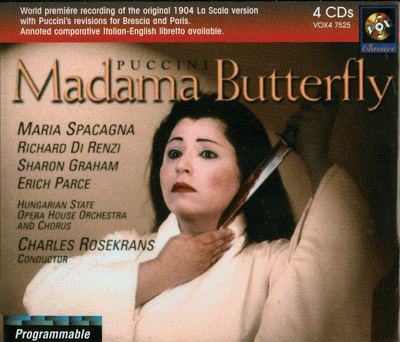
There is but one single recording of Madama Butterfly - ONLY ONE - that includes every version of Puccini's masterpiece. And it is from that one-recording that Apple chose to pull it's "Un bel di". The soprano singing Cio-Cio San on that recording - and on Apple's iPhone TV ad featuring John Malkovich - is ... Maria Spacagna.
Full disclosure: Maria Spacagna has been my voice teacher and mentor for many years ... no wonder I am accustomed to that voice, right?
Maria Spacagna truly forged her career singing the role of Cio-Cio San ... even becoming the first American-born singer to perform the role at La Scala, Milan ... thanks to a certain Maestro Lorin Maazel. This trailblazing moment was so monumental that it garnered Ms. Spacagna a place in La Scala's Encyclopedia of the Opera.
Under the baton of conductors such as Julius Rudel, James Levine, Edoardo Müller, Riccardo Chailly, Nello Santi, Placido Domingo and Marco Armiliato, Maria Spacagna has sung in nearly every major opera house in the world ... La Fenice in Venice, Arena di Verona, Festival Pucciniana in Torre del Lago, Deutsche Oper Berlin, New York City Opera, Dallas Opera, San Francisco Opera, Opera Theater of Montreal, and Canadian Opera in Toronto - just to name a few.
After establishing a reputation as a remarkably skilled soprano and consummate actress, it was time for Maria Spacagna to make her debut at the Metropolitan Opera. That debut came in the title role in Verdi’s Luisa Miller. Her tenor that night was some guy named Luciano Pavarotti [wink wink].
Soon thereafter, Ms. Spacagna was tapped by another tenor. This time, at Placido Domingo's request, Ms. Spacagna was invited to sing at a White House State Dinner at which President Bill Clinton and First Lady Hillary Rodham Clinton honored the Prime Minister of Italy.
A native of Rhode Island, Ms. Spacagna has been honored with the Rhode Island Pell Award for Excellence in the Arts, was the first recipient of the Distinguished Artist Award presented by the Rhode Island Civic Chorale and Orchestra and is a member of the Rhode Island Heritage Hall of Fame. She also recently received an award from the Italian Consulate General in Boston for Outstanding Achievement in Art, Culture and Entertainment.
Before her stellar operatic career, Maria Spacagna did what many singers don't these days ... she cultivated her voice and educated herself. After receiving Bachelor of Music and Master of Music in Voice degrees from the New England Conservatory of Music - where she was a student of Gladys Childs Miller - Ms. Spacagna furthered her studies as a member of the Juilliard Opera program in New York.
Inevitably, the combination of her education and her experience as an accomplished performer would make Ms. Spacagna an often-sought-after voice teacher. Ms. Spacagna maintains private voice studios in New York City, Boston and Providence, RI. She was also a member of the Boston University voice faculty, recently vacating her post to begin a new chapter this fall as Associate Professor of Voice at Carnegie Mellon's School of Music.
Above and beyond all of that, Maria Spacagna's voice is now the stunning soprano which sets the scene for John Malkovich and Siri - being forever woven into the fabric of our popular culture. And, she's in great company as she joins Maria Callas ... another soprano who lent herself to an Apple ad campaign.
Asking an opera lover who their favorite opera singer is, is kind of like asking an ice cream lover what their favorite ice cream flavor is.
For me, it kind of depends on the day: sometimes I'm two scoops of Rocky Road ... sometimes I'm up for plain chocolate ... and then, there are the days when Chocolate Chip Cookie Dough is where it's at. (The later has been the most recent fave...)
Okay - let's be honest, as long as it's ice cream and doesn't have anything to do with fruit or fruit flavor, I'm pretty much down for it.
If I asked you what your favorite ice cream was - could you answer?
More importantly ... what if I asked you who your favorite sopranos were? Could you narrow it down to your top 3?
That's what I'm asking you to ponder, my friends. This weekend, ponder which of the following sopranos - all from different operatic generations and all singing Tosca's "Vissi d'arte" - you would classify as your top 3 faves. Let me know your vote by tweeting me @JNewmanNYC or leave a comment below. If your top 3 aren't all represented here, let me know who your write-in candidate would be.
The first 10 responses (based on the time you responded) will be entered into a drawing for a prize package. No joke. PRIZES!
So, grab a pint of your favorite ice cream ... pop in your head phones and make sure to let me know what you think. Remember: Tweet me @JNewmanNYC or leave a comment below.
Enjoy.
#1 Montserrat Caballe
#2 Mirella Freni
#3 Maria Callas
#4 Shirley Verrett
#5 Angela Gheorghiu
#6 Hildegard Behrens
#7 Renee Fleming
#8 Daniela Dessi
#9 Sondra Radvanovsky
#10 Grace Bumbry
PS: For those who are about to jump down my throat because Leontyne Price is not represented above, RELAX. I could not find a live video clip of her that has decent quality sound.
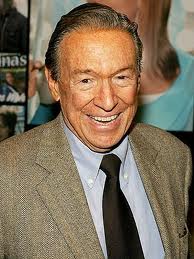
Often called the Grand Inquisitor of interviewers, Mike Wallace, who once declared there was "no such thing as an indiscreet question," died on Saturday at the age of 93.
In almost 40 years on the ground-breaking investigative journalism program "60 Minutes," he worked on some 800 reports, won 21 Emmys and developed a relentless on-air style that was characterized as interrogation rather than interview. In fact, during once such interrogation of a stage and screen legend, Mike Wallace became the only interviewer to cause the diva to cry. That legend: Barbra Streisand.
Wallace interviewed every U.S. president since John F. Kennedy - with the exception of George W. Bush -- and dozens of other world leaders. He also interviewed everyone from Malcolm X to Janis Joplin, Martin Luther King Jr., Johnny Carson and Playboy founder Hugh Hefner.
But, after zillions of interviews, which was Mike Wallace's favorite? Surprisingly enough, Morley Safer wrote in a tribute on CBSNews.com:
"It's strange, but for such a tough guy, Mike's all-time favorite interview was the one with [legendary], pianist Vladimir Horowitz. The two of them, forces of nature both: Sly, manic, egos rampant. For Mike -- a red, white and blue kind of guy -- Horowitz played 'The Stars and Stripes Forever.' It almost brought tears to the toughest guy on television."
One of my favorite Mike Wallace interviews is one that he did with soprano Maria Callas in her Paris apartment. He aggressively goes after Callas in a way that 5 or 10 years prior to this interview, he would not have gotten away with. Callas would have had his head on a platter. But, in 1973, Callas was a different person ...
Franco Zeffirelli lived there. Liza Minnelli stayed there. Elton John stayed there. Leonard Bernstein stayed there ... even Maria Callas stayed there. If those walls could talk ... the stories they could tell.
Here's the kicker, Chiclets ... now, you can stay there, too.
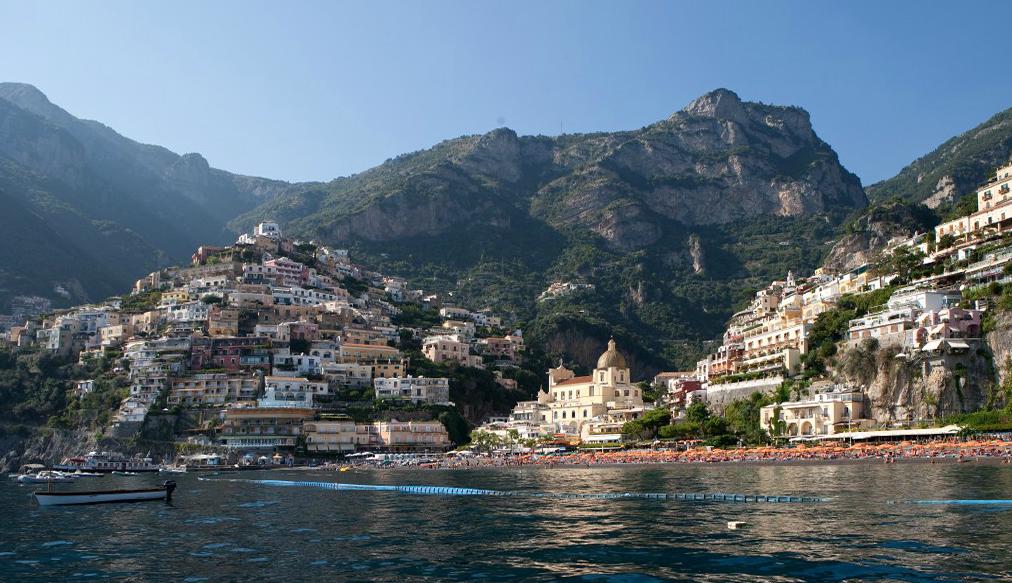
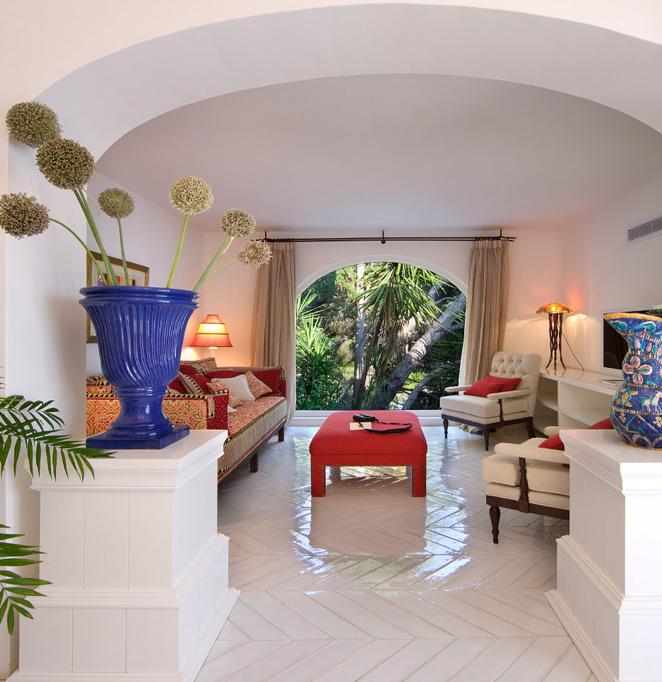
Italian film and opera director Franco Zeffirelli's palacial villa compound in Positano used to be his playground - but, in 2007 it was purchased by hotelier Giovanni Russo. Russo took great care in restoring the Maestro's private hideaway - and hideaway to the stars - turning it into a 15 suite hotel of grande operatic proportions ... Villa Tre Ville.
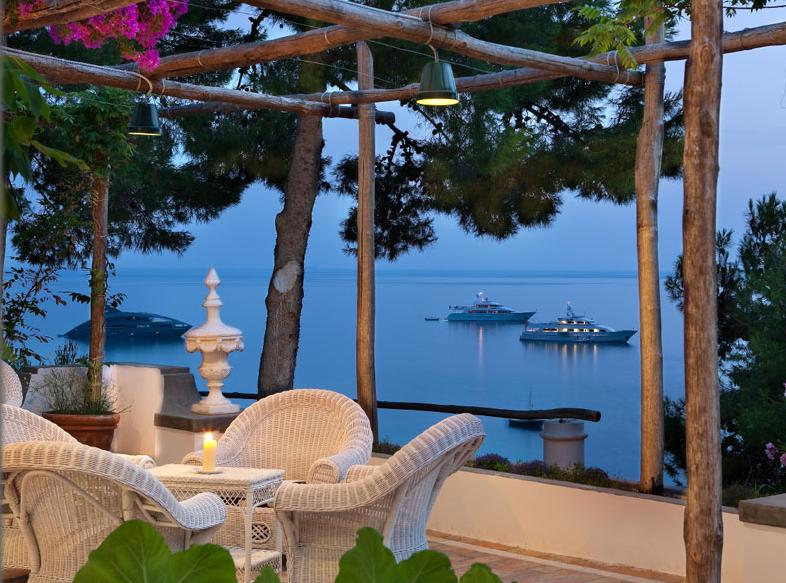
Villa Tre Ville ... positioned on the Amalfi Coast mountainside overlooking Positano, the compound boasts five acres of terraced grounds offering any number of places to relax. A pergola shaded restaurant serves fresh fish and organic produce that is grown right on grounds of the compound. If you're not hungry, that's ok - two scenic lounges are available to guests - along with a secluded pool that can only be reached via an elevator that was cut though the cliff.
Hmmm... where would one stay?
Let's see, in the Villa Tre Pini, you could stay in either the L'Aida, La Turandot, La Carmen, La Norma or Romeo e Giulietta Suites. In Villa Rosa, you could stay in Suite Bernstein or Suite Nijinsky. With spectacular views of the Amalfi Coast, you can't go wrong in any of those.
But, I will say that Yours Truly would most likely be headed for the Villa Bianca. As someone who is obsessed with history and those who've come before us ... I would probably plotz. For, you see, it is in Villa Bianca that you could stay in either the Suite Callas - Tosca or, if you are able to part with $7,680 a night you could stay in Zeffirelli's former residence - Suite Maestro Zeffirelli. As I understand it, the Suite Maestro Zeffirelli still houses a number of his books and personal furniture pieces etc. To me, that's worth the price of admission.
Let's take a little photographic tour, shall we?
Suite Maestro Zeffirelli
Suite Callas - Tosca
The shower in Suite Bernstein was actually converted from an old oven.
One of the many relaxing terraces - complete with hot tub.
Suite Romeo e Giulietta
Suite La Turandot
The view from Villa Tre Ville
It's too much, isn't it? Hmmm - perhaps you're right ... maybe, it's just right.
So, when I came upon this photo while swirling down the vortex that is Pinterest, and I knew right away that it would be today's installation.
The photo captures soprano Maria Callas, director Luchino Visconti and conductor Leonard Bernstein ... pre-rehearsal - or perhaps post-rehearsal. These three extreme personalities, vibrant talents and incomparable legends in the same photo. It's enough to get my weekend off to a smiling start.
Leonard Bernstein called her "The Bible of Opera."
In 2006, Opera News wrote of her "Nearly thirty years after her death, she's still the definition of the diva as artist — and still one of classical music's best-selling vocalists."
In 2007, she was posthumously awarded the Grammy Lifetime Achievement Award. In the same year, she was voted the greatest soprano of all time by BBC Music Magazine.
Maestro Tullio Serafin called her "Una grande vociaccia" ("A great, ugly voice").
Maestro Carlo Maria Giulini said, "It is very difficult to speak of the voice of Callas. Her voice was a very special instrument. Something happens sometimes with string instruments—violin, viola, cello—where the first moment you listen to the sound of this instrument, the first feeling is a bit strange sometimes. But after just a few minutes, when you get used to, when you become friends with this kind of sound, then the sound becomes a magical quality. This was Callas."
Classical record producer Walter Legge said she possessed that most essential ingredient for a great singer: an instantly recognizable voice - also calling her the "supreme mistress" of bel canto.
Maestro Antonino Votto called her "the last great artist" ... he continued, "When you think this woman was nearly blind, and often sang standing a good 150 feet from the podium. But her sensitivity! Even if she could not see, she sensed the music and always came in exactly with my downbeat. When we rehearsed, she was so precise, already note-perfect... She was not just a singer, but a complete artist. She was an aesthetic phenomenon."
Sir Rudolf Bing said of her: "Once one heard and [her] — one can't really distinguish it — in a part, it was very hard to enjoy any other artist, no matter how great, afterwards, because she imbued every part she sang and acted with such incredible personality and life. One move of her hand was more than another artist could do in a whole act."
Many of her fans called her 'La Divina'.
When you look up 'force of nature' in the dictionary, the entry reads: "in physics, one of the four fundamental forces that occur in nature and affect the structure of the universe, including gravitation, strong force, and weak force". Whatever you choose to call her ... in the minds and hearts of so many people, Maria Callas was, indeed, a force of nature.
Wishing the happiest of birthdays to Maria Callas, who would have been 88 years old today.
Regarding her latest recording, La Gheorghiu - who, it seems, has fancied herself as the next Callas for quite some time - says:
Callas was original in everything she did; she was a phenomenon. In every performance she gave her all. She was the most wonderful painter and you can always hear exactly the right color in her voice. Just hearing her sound, you understand all the power or fragility of her emotions. That's a rare talent and a great gift ... EMI was her record label and it's mine too. It feels like a family.
I'm afraid that's right where the "family feel" stops ... that is to say: I'm not sure Callas' fans will be as quick to embrace her self-coronation as the next La Divina.
Michael White of The Telegraph blogs about his recent experience at the launch party for EMI's latest ploy to make money off of Callas' name ... the launch party for Homage to Maria Callas.
A depressing evening last night at the Ivy where EMI were hosting a party for Angela Gheorghiu and her new CD ...
... Most depressing was the rictus-grinning phoniness of the whole thing, as EMI staff fawned over the diva, choked with laughter at her least remarkable remarks, and smothered her with flattery so absurd she should have been offended by it – as any self-respecting artist of integrity could only be. It felt like people humouring a madwoman.
Underneath it all was the sense of desperation that is presumably endemic at EMI these days. Commercially, artistically, this once great company seems to have lost its way. Its modest presence in the recent Gramophone Awards was thanks entirely to Antonio Pappano. The rest of its catalogue doesn't appear to be doing much of interest. And as for this new release, it plants Gheorghiu on dangerous ground – particularly as it comes with a promotional video that splices and superimposes performances of Callas and Gheorghiu singing the same aria from Carmen and making the clear suggestion that they're artists of equal, interchangeable calibre.
That Gheorghiu is a singer of outstanding qualities I don't dispute. But Callas she is not. And there will be a lot Callas fans who don't take the comparison too kindly.
Wait ... there's VIDEO? Oh yes, indeed. Bring. It. On.
So, Chickpeas ... do you ever think about what someone like Maria Callas did on stage when the wheels started coming off the musical bus? I know I do. Well, if you're a YouTube-geek, like I am (and you know you are), you may have already seen this clip. If so, it's worth another look - for sure. If you've not seen it ... trust me, you'll find much pleasure in this week's Another Favorite Clip.
In this vintage-1958 Callas clip, we see La Divina hauling out another "Casta Diva" from Bellini's Norma. Only this time, when the chorus comes in part way through the first half, they begin singing a little late and while some try to catch up, others dig their feet in. What we're left with is a diva, center stage, flanked by a chorus that is singing out of sync.
La Divina is having NONE of that. As she joins the choir (approx the 3:00 mark), she holds up her hand in order to tell them to cease .... perfection. It doesn't just stop there, though. Shortly thereafter, she cues the choir to come in at the proper spot by tilting her head back slightly. Yes. She. Does.
Just when you think she's done ...
As soon as everyone gets back in sync with each other, she gives a look to stage left - I'm assuming the look is toward the offending party - and gives whomever she's looking at a *serious* up/down.
You think I'm joking? Have a look ... and, enjoy! I know I did.
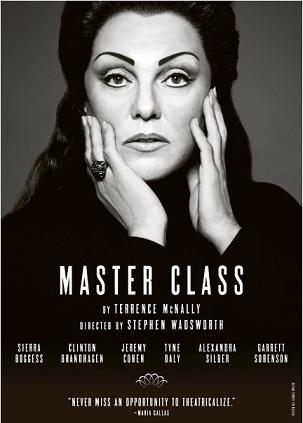
Then, earlier this year we heard directly from Tony Award-winning playwright and librettist Terrence McNally on the revival of his play Master Class - starring Tyne Daly. And now...
Tyne Daly's late-career diva Maria Callas in Terrence McNally's music-kissed biographical drama, Master Class, dawns on Broadway starting June 14 at Manhattan Theatre Club's Samuel J. Friedman Theatre. The play about the famed opera star won the 1996 Tony Award as Best Play.
Director Stephen Wadsworth worked with Tony Award winner Daly (the 1989-90 Gypsy) on the 2010 Kennedy Center revival of McNally's play, set in a master class in which Callas critiques young legit singers and muses on her life, loves and career. Wadsworth's Broadway company includes Olivier Award nominee Sierra Boggess (Love Never Dies, The Little Mermaid) as student-singer Sharon, a role that won Audra McDonald a Tony Award; Clinton Brandhagen as a Stagehand; Jeremy Cohen as accompanist Manny; Alexandra Silber as student-singer Sophie; and Garrett Sorenson as student-singer Tony.
According to MTC, "Terrence McNally's play about Maria Callas (Tyne Daly) takes us to one of her famous master classes, where, late in her own career, she dares the next generation to make the same sacrifices and rise to the same heights that made her the most celebrated, the most reviled and the most controversial singer of her time." [Source]
The Tony Award-winning playwright and librettist Terrence McNally's 20th Broadway production arrives on July 7 of this year ... a revival of his Tony Award-winning Best Play of 1995, Master Class, starring Tyne Daly as Maria Callas. This revival comes as McNally still has a show on the boards of the Great White Way - Catch Me If You Can which he wrote with Marc Shaiman and Scott Wittman.
Terrence McNally opened up to Playbill.com's Harry Haun about his fascination with Maria Callas:
Are you pleased that Master Class is coming back?
Oh, very. Tyne gave an extraordinary performance at the Kennedy Center. It deserves to be seen in New York. She made it her own. I never found myself comparing her to anyone else who's done the part. I thought she was absolutely wonderful on her own terms — and I've been very lucky with my Marias: My God! from Zoe Caldwell to Patti LuPone to Dixie Carter, just on Broadway. Fanny Ardant had a great success in it in Paris, and there's a woman doing it in The Netherlands now who got extraordinary reviews and is kinda their leading actress there.
Was it easy for you to write Callas? It seemed like you were so connected to that character.
Maria Callas was someone I've thought about since I was a very young person when I first heard her voice on the radio growing up in Texas. I fell in love with the sound of her voice. She has fascinated me. And then her life! That kind of inner turmoil of falling in love with and being rejected by one of the richest, most powerful men in the world — it's quite an extraordinary trajectory for anyone's life. It just seemed very theatrical to me.
But when you sit down to write it, you don't know if anyone else is going to enjoy it or be interested in it. I'll never forget the first time we ever did it for anyone. Zoe and I and Lenny Foglia, the director, went to Big Fork, Montana, and read the play in a Town Hall sort of auditorium just to see how Normal People — non-opera, non-Callas fanatics, non-New York theatregoers — would react to the play. We took three planes and still drove for quite a while. It was a very long trip, but they loved it. When it was over, one of the questions was, "Is Maria Callas a real person?" Then the woman turned to her husband and said, "Ya see, I told you she was a real person." Someone else asked Zoe if she was a professional actress. Zoe said, "Yes, I am." The woman said, "You're very good." Zoe said, "Thank you." So we thought if the play works for an audience that doesn't know that, my God, this is the legendary Zoe Caldwell with 85 Tony Awards, then maybe the play has a chance elsewhere.
For more from Terrence McNally, visit the full write up at Playbill.com.
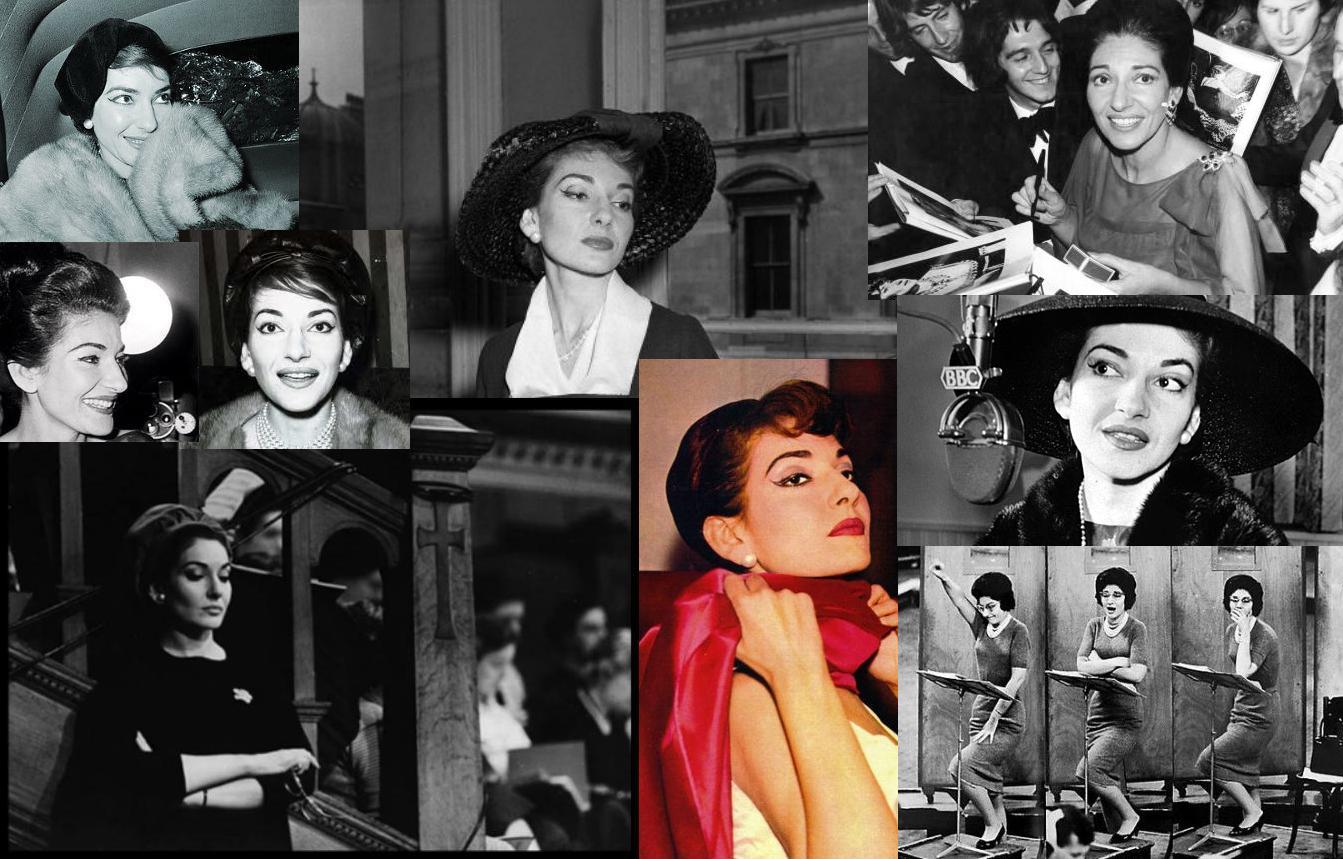
On this date in 1977, soprano Maria Callas - perhaps Opera's most mainstream celebrity of the pre-Pavarotti world - died in Paris. She was only 53 years old.
The cause of death was attributed to a heart attack - although some will report it as heart failure. If you talk to famed opera and film director Franco Zeffirelli, you'd probably get a different story. In 2004, Zeffirelli made what many consider a bizarre claim that Callas had been murdered by her confidant, Greek pianist Vasso Devetzi, in order to gain control of Callas's estate - which was estimated to be about $9M.
Truth be told though, it seems that Maria may have, either accidentally or not, offed herself by overdoing it with the drug Mandrax (methaqualone) which was a common sleeping aid at the time.
I think many would love nothing more than to make her death more sensational than her life - as if getting her ashes stolen from Pere Lachaise Cemetery isn't sensational enough.
PS and FYI: They were later recovered and scattered in the Aegean Sea.
As I've said before, those who are counted as legends seem to leave us all too early. Perhaps that is one of the things that contributes to the legend. No matter who you ask, Callas was indeed a legend - at least an operatic one - because of her artistry, her relationship with Aristotle Onassis, her temper, her all-too-public decline and her larger-than-life persona.
The legend aside, we can still get lost in her artistry thanks to the beauty of YouTube.
There are some things that I read that really and truly cause my eyes to cross and steam to rise from my ears.
This is one of them.
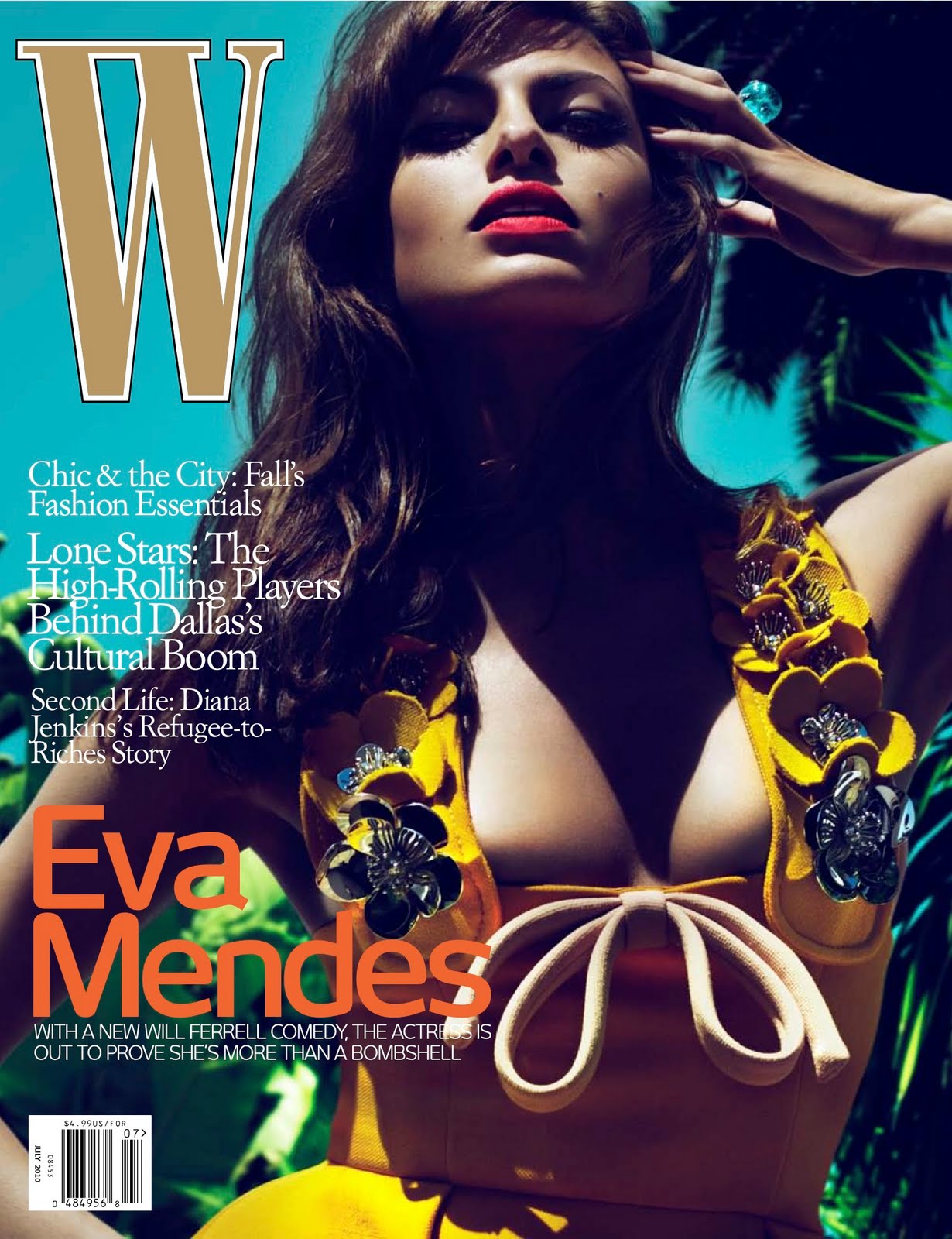
From an article about Eva Mendes in the July issue of W Magazine:
Lately she has been listening to recordings of Maria Callas, whom Mendes says she’d love to play onscreen. “You can catch me at a very dark hour listening to an aria from Norma and crying my f—in’ eyes out,” she says. “I love doing that.”
...She’s also fascinated by the diva’s decision to abandon her career for shipping magnate Aristotle Onassis. “She gave it all up in the name of love, only to be left because she gave it up,” says Mendes, who is developing a project based on a Callas biography by Nicholas Gage. She admits that the story has become something of an obsession for her, seeing in it, perhaps, resonances with her own dual passions. “I’m a modern woman in the sense of I take care of myself, I’m fiercely independent and I’m really ambitious,” she says. “Yet I have these old-school thoughts ingrained in my mind. I do like to belong to a man. I love having a man in my life and being his woman at the end of the day. I know it’s a dichotomy.”
If this were the game show Jeopardy ... I'd choose Things I'd rather stab myself in the eye with an unsharpened pencil than see. ... for $5000, Alex.
The answer: What is - Eva Mendes playing Maria Callas in any capacity whatsoever?
Kaiser, writer for the blog Cele|bitchy, says what I'm feeling in a much more diplomatic way:
Eva would be a terrible Callas. Just awful. I know that sounds mean, and I seriously don’t mean Eva any harm, because she’s actually pretty harmless, but please don’t let her play Callas. Callas was an old-school diva, a larger-than-life presence, all tragedy, all drama, all passion, all of the time. Eva is… pretty. That’s it. She can’t play the part. Throw a black wig on Meryl Streep, and she could do it. Not Eva.
Legendary mezzo-soprano Giulietta Simionato, [R.] died Wednesday. She would have turned 100 on May 12.
Simionato, a good friend of Maria Callas and the president of the International Maria Callas Association, died at her home in Rome, the ANSA news agency reported.
In a tribute to Simionato at her final performance in 1966, La Scala praised her "expansive, balanced, emotional and recognizable" voice as well as her personal character.
"Few 'family artists' have been so loved, and no book on the history of opera can consider itself complete without a chapter on her dazzling career," La Scala said.
On December 2, 1923, Sophia Cecelia Kalos was born here in Manhattan. Later christened Sofia Cecilia Anna Maria Kalogeropoulos, Maria Callas was the 3rd child of Greek immigrants George and Evangelia Kalogeropoulos.
Since Maria's older brother had died from meningitis, Evangelia (or Litza) was convinced that her third child would be a boy; she was so disappointed by the birth of another daughter that she refused to even look at Maria for four days. Around age three, Maria's musical talents began to manifest themselves, and after Evangelia discovered that her youngest daughter also had a voice, she began pressuring Maria to sing. Callas would later recall, "I was made to sing when I was only five, and I hated it."
After a non-existent childhood, Maria's mother moved her and her sister Jackie back to their home in Greece. Callas began studying voice and before long was studying with spanish coloratura Elvira de Hidalgo at the Athens Conservatoire. De Hidalgo would later recall Callas as "a phenomenon... She would listen to all my students, sopranos, mezzos, tenors... She could do it all." Callas herself said that she would go to "the conservatoire at 10 in the morning and leave with the last pupil ... devouring music" for 10 hours a day. When asked by her teacher why she did this, her answer was that even "with the least talented pupil, he can teach you something that you, the most talented, might not be able to do."
On April 2, 1939, a 16 year old Maria Callas undertook the part of Santuzza in a student production of Mascagni's Cavalleria Rusticana at the Olympia Theater, and in the fall of the same year she officially enrolled at the Athens Conservatoire. After several appearances as a student, Callas began appearing in secondary roles at the Greek National Opera. De Hidalgo was instrumental in securing roles for her, allowing Callas to earn a small salary, which would help her and her family get through the war.
Callas made her professional debut in February 1942 in the small role of Beatrice in Franz von Suppé's Boccaccio. Later, Callas made her leading role debut in August 1942 as Tosca, going on to sing the role of Marta in Eugen d'Albert's Tiefland.
Back in the United States by 1945, she auditioned for Edward Johnson, general manager of the Metropolitan Opera in December. Callas maintained that the Met offered her Madama Butterfly and Fidelio, to be performed in Philadelphia and sung in English, both of which she declined. She felt she was too fat for Butterfly and did not like the idea of opera in English. Although no written evidence of this offer exists in the Met's records, in a 1958 interview with The New York Post, Johnson corroborated Callas's story: "We offered her a contract, but she didn't like it—because of the contract, not because of the roles. She was right in turning it down—it was frankly a beginner's contract."
Refusing the Met in the beginning proved no effect on her career. She quickly became one of the most recognized and famous women in the world and was also responsible for bringing many of the long forgotten Bel Canto operas back to the stage. Of course, with fame comes scandal and controversy: The dramatic weight loss, a "rivalry" with Renata Tebaldi, her difficult temper, her firing from the Met by Rudolf Bing, a relationship with Greek shipping tycoon Aristotle Onassis which ended when Onassis left Maria for Jackie Kennedy and her subsequent vocal decline.
Because of this vocal decline, her singing career was essentially over by the time she was 40. In a magazine article printed shortly after her death, Callas is quoted as saying:
I never lost my voice, but I lost strength in my diaphragm. ... Because of those organic complaints, I lost my courage and boldness. My vocal cords were and still are in excellent condition, but my 'sound boxes' have not been working well even though I have been to all the doctors. The result was that I overstrained my voice, and that caused it to wobble. (Gente, October 1, 1977)
Callas spent her last years living largely in isolation in Paris and died on September 16, 1977, of a heart attack. A funeral was held at St. Stephen's Greek Orthodox Cathedral on rue Georges-Bizet, Paris, on September 20, 1977, and her ashes were interred at the Père Lachaise Cemetery. After being stolen and later recovered, they were scattered over the Aegean Sea, off the coast of Greece, according to her wish.
As with many people of her stature, Maria Callas' genius was overshadowed by the controversy that followed her and the scandals that distracted her. No matter, though: Her artistic achievements were so great that Leonard Bernstein called her "The Bible of opera". In 2006, Opera News wrote of her, "Nearly thirty years after her death, she's still the definition of the diva as artist—and still one of classical music's best-selling vocalists."
Happy Birthday to Maria Callas who would have been 86 years old today.
Once again, we would like to thank La Cieca at Parterre.com for bringing this little tidbit to our attention.
Leave it to none other than Liz Smith to compare a certain ex-VP candidate / ex-Governess Sarah Palin to Ultimate-Diva Maria Callas.
"I will not enter into a public feud with Madame Callas, since I am aware she has a far greater competence at that sort of thing than I have," said opera’s Rudolf Bing of the combative diva many years ago.
Levi Johnston – are you listening?
Flawless.
The truth of the matter is that he really has gone way over the top with his attention-seeking behavior. Now, the report is that he's planning to pose for Playgirl? His "publicist" is certainly working overtime.
I agree with Miss Liz - he better watch himself where the ex-Governess is concerned. Miss Liz continues:
There is a Medusa behind those Foster Grants; an atmosphere of Faye Dunaway barking in Mommie Dearest – "Don’t f**k with me, fellas. This ain’t my first time at the rodeo."
#1- What do you do when you're a world renowned opera star in the later days of your career and you've basically fallen off the radar without actually "announcing" your retirement? Well... you stage a comeback to announce your retirement, of course.
For 40 years, Dame Kiri Te Kanawa [L.] has sung in front of opera audiences around the world. In 1981 she was heard by 600 million people when she sang at the wedding of the Prince of Wales and Lady Diana Spencer. Now, after not having appeared on the operatic stage since Vanessa at LA Opera in 2004, she is coming back to take a few turns as Marschallin in Der Rosenkavalier at Germany's Cologne Opera. After that, she will appear at the MET as the Duchess of Krakenthorpas in La Fille du Regiment. You'll remember that the Duchess is a spoken role, but Te Kanawa says she will surprise her audiences by singing some.
Although she complains that the operatic discipline is “exhausting”, she says she never retired. According to an article in the Telegraph Dame Kiri says: "The press retired me ... I have not been singing opera very much but I still sing a lot of concerts." She goes on to say, "I’m extremely busy with all sorts of things." Much of her time as of late is dedicated to training what she calls the “future stars of opera”, through the Solti Academy and her Kiri Te Kanawa Foundation.
#2- In the last Drama Drop, I spoke about Anna Netrebko's cancellation of her La Traviata contract at the MET. In addition, I sort of dropped a little idea: I feel there to be a competition between La Netrebko [R.] and a certain Angela Gheorghiu [bottom L.] over who is the "new" Maria Callas. As you can see, both have been photographed in extremely retro styles that harken back to certain iconic pictures of Callas.
Well, not to be topped by La Netrebko's "Callas-like" cancellation ("I do not do routine"), Gheorghiu has announced, with deep regret of course, that she has to withdraw from the first 6 performances of the MET's Carmen for "personal reasons". Let's not forget that Callas refused to sing Carmen, also due to personal reasons - which were actually steeped in vanity. Callas didn't want to show off her "cankles" during the gypsy dance.
It would seem that Gheorghiu's personal reasons have less to do with vanity and more to do with a certain Mr. Angela Gheorghiu (tenor Roberto Alagna) who was to sing the same six performances as Don Jose? The only performances that Gheorghiu has remained committed to, are the performances which star Jonas Kaufmann as Don Jose. Take from it what you will.
#3- Also posted here previously was a bit about the Emmy revamp. Due to slumping ratings, producers were going to give the production a little nip-tuck. Mainly, they had planned to prerecord and edit the presentation of eight awards to allow for more time to celebrate shows that are popular with the public but which might not have been nominated. “We’re going to try and connect the show more to the big picture of television,” Don Mischer, the executive producer of the Emmy telecast, told a meeting of the Television Critics Association.
John Schaffner, the president of The Academy of Television Arts & Sciences, said he believed the change would be “quite fun” for those in the prerecorded categories. “Not only do they get to go up onstage and win,” he said, “then later in the evening they can sit in the audience and watch themselves win again.” In a word: ridiculous.
Well, the television academy and the producers of the show have all done an about-face saying it would present all 28 awards during its live broadcast on CBS on Sept. 20. Because, again, who in their right mind would want to watch a star... watch themselves... win an award that they just won earlier that evening?










 is a collection of beloved French and Italian operatic masterpieces - apparently inspired by the