Friday, September 30, 2011

Come fly with me ... and, let's wallow in nostalgia

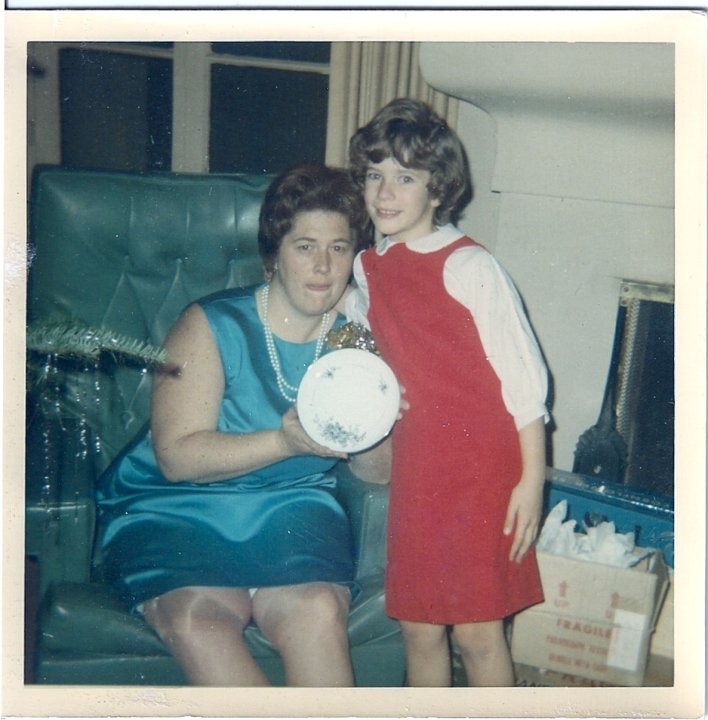
My mom and sister mid-1960s.
I debuted late in my family. And due to that fact, I sometimes feel like I was born in the wrong era and here's why...

Many of the family photos that I have were taken during the '50s, '60s and very early '70s ... and by the time Yours Truly came along in the mid '70s, pictures weren't being taken as often. Subsequently, when I look back on my family photos, I feel transported back in time. I'm transported to a time that I was never a part of - but, given the subjects in the pictures, feel incredibly connected to. To say that I feel nostalgic toward those decades is an incredible understatement.

In prepping for my recent post on the Barihunks "craze" contributing to the Hollywood-ification of Opera, I was revisiting my connection to and feeling of nostalgia for the decades directly preceding my birth. The reason being that opera was truly stellar during those decades ... Callas, Tebaldi, Stignani, Ludwig, Corelli, Di Stephano and Rossi Lemeni passed the torch to Sutherland, Horne, Pavarotti, Domingo, etc etc etc.

And you know what, Chiclets, I am struck by how drastically things have changed in our culture since then. How our lives have become ordinary, disposable, raw, casual and common-place. More specifically how over the last few decades, "elite" has become a dirty-word and anything that people might associate with the word "elite" has either been dropped like a red-hot potato or has been "dumbed down" in order to not appear that it is elite.

Princess Grace Kelly meets soprano Maria Callas.
For a perfect example all you have to do it turn on your television to any of the dozens of Reality TV shows that appear at any given time. We have "Housewives" who yell, back-stab, cry and generally act like self-absorbed fools. We have teen moms whose lives are glorified into a reality-based soap opera. We have a group of 20-somethings whose debauchery filled vacations at the Jersey Shore have turned them into instant celebrities. And then there's this: A family of absolute no-names who have made millions of dollars and gained celebrity status, all because their E! reality show has made them "relevant".

Need I continue?

I believe we are trying to do the same with opera and the arts in general. We want to take the "elite" out of it - to dumb it down and turn opera into a vehicle for people who probably have no business being on an operatic stage, but certainly LOOK "the part". (What exactly *does* a Valkyrie look like, anyway?) We want opera to be hot, now, relevant, hip and on-trend instead of what it was: grand, opulent, stunning, elegant and yes - elite. We want to turn it into something that is easy for people to watch in a local movie theater while chowing down on their bucket of popcorn, box of nachos, Skittles and drinking their silo of Coke.

I know... I know - it's like a pendulum. Society swings one way and eventually swings back. I get it.

I am certainly not advocating that we go back to the time when women vacuumed in their house dress and heels or when men wore suits everyday (I, for one, hate being hot). Nor am I advocating for us to go back to a time when Lucy and Ricky had to sleep in separate beds and say the word "expecting" because "pregnant" was too racy to say on television ... but, there has to be a happy medium, right?

Recently, I happened upon a piece written by the former managing editor of the Los Angeles Times, Leo C. Wolinsky. In it, Mr. Wolinsky talks about this very subject and has a truly interesting hypothesis as to how we got where we are.
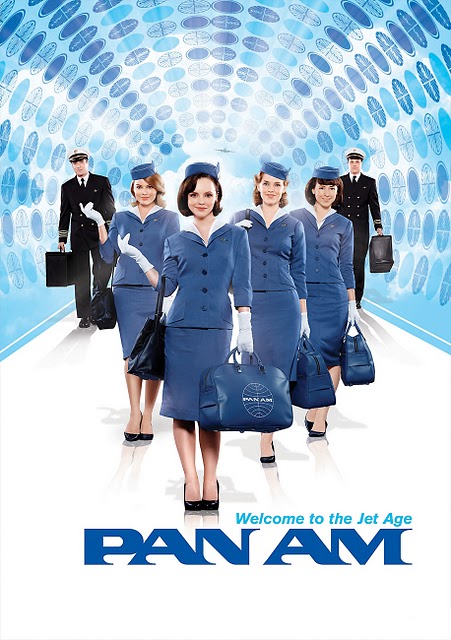
Here in it's entirety (thank you, Mr. Wolinsky) is his piece:
A Flight From Elegance
Leo C. Wolinsky


The ever debonair Cary Grant personified it. So did actress turned princess Grace Kelly.

Some events still boast of it: Opening night at the Metropolitan Opera, Hollywood's Oscars, and Washington's Kennedy Center Honors.

Elegance is defined by Merriam Webster as dignified gracefulness or restrained beauty of style. Yet exactly what it means to be dignified, graceful or restrained clearly has changed over the years.

At the risk of wallowing in nostalgia, these days there's simply a lot less of it in our lives.

Two recent televised events got me thinking about elegance. The first was last night's ABC television premier of
Pan Am, the jet-age period drama depicting a glamorous era of air travel. The second was the 1964 audio interview with Jacqueline Kennedy conducted shortly after the assassination of JFK and aired earlier this month with much fanfare, also on ABC.

Both were reminders of a bygone era during which graciousness and manners were prized above today's values of raw candor and self-absorption.

Looking back at vintage photographs of the era, it's easy to see why Jackie Kennedy's Chanel-knockoff pink suit and pillbox hat became symbols of style and elegance. But it wasn't just her clothing. It also was the way the first lady carried herself; the low and slightly breathless way she spoke. Even the way she pronounced her name. It was Jockleen not Jackie, as America knew her.

Sunday's
Pan Am drama accurately reflected air travel in the 60s, when a flight between two cities felt akin to boarding the opulent Queen Mary for an Atlantic crossing. Men turned up in coat and tie; women in dresses. Airport lounges seemed luxurious by today's standards and service was gracious.

Much the same held true for fine restaurants of the day. The best had dress codes. Jackets were required of the men. If they showed up without one, they would be supplied by the waiter.

The Oscars was dominated in Hollywood's heyday by simple ball gowns; black tuxedos for the men. A worthy symbol of that period was the aqua silk gown created by Edith Head for Grace Kelly when she accepted her Best Actress statuette in 1955 for
The Country Girl.

One of the most enduring images from that era was J. R. Eyerman's Life Magazine shot of filmgoers wearing 3D glasses for an early stereoscopic movie -- the men in coats and ties, the women in hats and furs.

Even schoolteachers came to class dressed as if their time really mattered.

People spoke publicly in more elegant tones, although not necessarily in private among themselves. If you exclude the disputed image of an infuriated Nakita Khrushchev pounding his shoe on his United Nations delegate desk in 1960, public speaking was mild, even academic-sounding, in contrast to today's raw rhetoric.

Certainly early television never pushed the bounds of taste, not even daring to show married couples sleeping in the same bed. Forget vulgar. You couldn't even find crude. There were no Howard Sterns or Kardashians for that matter.

I'm not one to make a judgment here. After all, one of my closest encounters with elegance came at a grand opening of a mid-level hotel near Los Angeles International Airport, from with I was ejected for wearing an electric-blue sport coat, plaid pants and Cuban-heeled shoes. (Don't laugh, it was 1972.)

For many, the rules of elegance felt more like repression. Living in the 50s and 60s was like wearing a straight jacket. Public image often had little to do with real life that was being played out behind closed doors.

The turbulent period after JFK's assassination challenged all these conventions and created a new society that at least seemed more honest with itself.

But elegance was sacrificed. In its place came cool and hip.

Today's dress codes generally mean shirts with collars and no cutoffs. Ripped jeans, underwear as outerwear, the use of soft porn images on billboards, explicit language on radio, television and in ordinary conversation -- all of it passes for cool. It just isn't elegant.

What sometimes does pass for elegant today is simply glitz. The Oscars maintains its reputation as Hollywood's most elegant night. But for every Grace Kelly these days you're likely to find a Bjork in a feathered swan dress, more suited to the opening night of Ringling Brothers.

I'm sure there are still islands of elegance out there somewhere. So I scoured the Web. I asked my sophisticated friends. I drove through Beverly Hills. I even checked out that hotel near LAX.

I'm still looking.
So am I, Mr. Wolinsky. So am I.

Saturday, September 24, 2011

Here we go again ... this time, it's the guy's turn

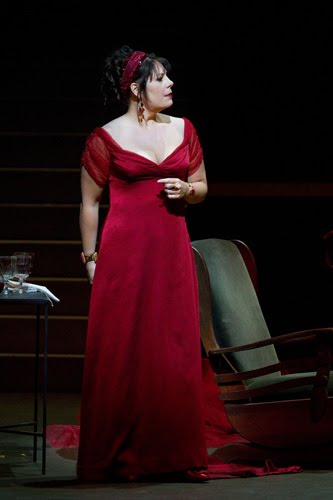
Sondra Radvanovsky as Tosca
I've ranted here before about ladies in opera and the incessant pressure to drop weight. Oh, yes ... there was that time when Sondra Radvanovsky was profiled in The New York Times:
[Radvanovsky] has been trying to lose weight for Il Trovatore, which will be broadcast in the Met’s Live in HD series on April 30. “No one is putting pressure on me,” she hastened to say, “but I don’t want to look like a big, fat cow on the movie screen! And it’s sad that I’m saying that, but it’s the truth.”

There is an inevitable tension among singers, she said, who are conscious that a camera will be monitoring their every facial tic. “If you get a bad angle, they’re looking up your nostrils,” she said. “We’re singers and we make funny faces, and this is broadcast around the world. I think a lot of my colleagues have done various things to make themselves look better on camera.”
Indeed they are.

I'm sure by now, most of you have heard about the blog Barihunks. You know what I'm talking about - the blog that covers ... or rather UNcovers ... baritones that some might consider to be hunk-ish.

Being a bass baritone that is in *no* danger of being posted as one of these hunks, I don't have reason to traverse there unless some sort of news-worthy item points me in that direction ... which actually has happened a few times.

So, today's item comes to you courtesy of Nashville Opera who brought this link to my attention. CBC Radio Canada posted the following:
Barihunk - hot or not?

If you're heading to a night at the opera, you may be pleasantly surprised to see a barihunk or two on stage. And by barihunk, I'm referring to a new breed of male opera performers who are admired for their voices and their bodies, including Daniel Okulitch, the Calgary-born bass-baritone who recently starred in
The Fly and Don Giovanni at New York City Opera.

Daniel, and many other buff baritones, are celebrated at barihunks blog. The founder of that site believes that a growing emphasis on stunning male singers is a positive direction for the opera world.

Would you be more interested in going to the opera if it featured a barihunk in a starring role?

Personally, I've found it difficult to believe some opera performers who, despite having wonderful voices, just don't look the part. For me, those unbelievable performances come across as badly as a sour note and they detract from the opera as a whole. So bring on the barihunks, as long as they can flex their vocal cords, too.

Tori Allen, Q producer

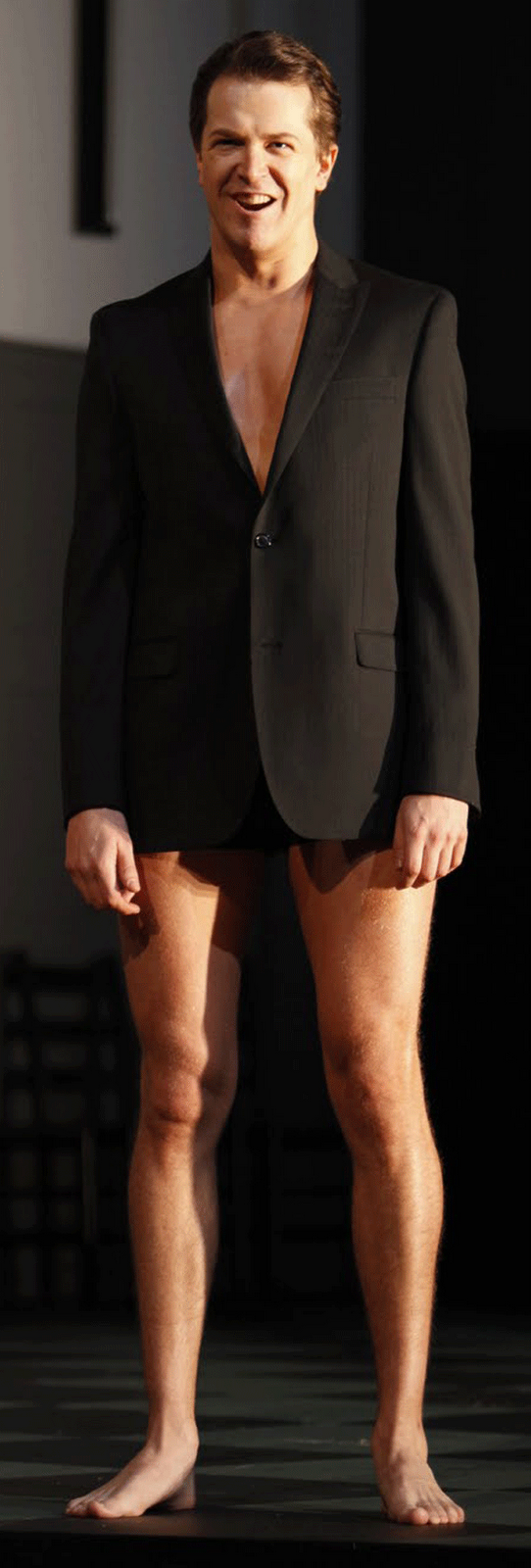
Here's a sample image of Daniel Okulitch, who is often featured on the barihunk blog
[R.]
Let's be clear about something - anyone who uses the argument, "I've found it difficult to believe some opera performers who, despite having wonderful voices, just don't look the part..." must be spending more time watching opera on DVD or on a movie theater screen than they are watching it live. Because honestly, when you're sitting in a theater - sometimes 25, 50, 75 or more feet away from the stage - is it really possible for your experience to be "soured" by whether or not a lady is a size 4 or a gentleman is hunk-ish? Really? Come. ON!

I know that some will say, "Well, I can see up-close with my opera glasses." Clearly, if you're going to the opera to catch some baritone in his grape smugglers, you're not there for the pleasure of hearing beautiful singing - you're there for a different pleasurable feeling.

As you've heard here before ... we are at a place in opera's history when it appears that the fundamentals of the opera world are changing. Opera is a big art form which requires big orchestras, big voices, big gestures and big personalities. It has always been centered around the voice and around making a sound big enough to cut over the orchestra and to fill a house without amplification. Indeed, opera now seems to be metamorphosing to fit a small, very confining screen. Let's be honest, even a movie theater screen is a small screen compared to the grandiosity of opera.

Part of the metamorphosis is the focus on singer's looks as opposed to their voices. To that end, opera is becoming like everything else out there. In order to work, you have to be a thin lady or a hunk-ish guy. It's so hollywood.

So, I ask you: When did we decide to mold our art form into looking like everything else that's out there? When did we decide that Hollywood's ideal should be our ideal, too? The most important question of all, however: when will this metamorphosis from operatic-grandiosity to Hollywood-fabulosity begin to take it's toll on our art form? Because you *know*, Chiclets, that sooner or later it will take it's toll.

Indeed, the days numbered for opera singers who sing and act the hell out of a role, but don’t have the Hollywood looks or size. Are we going to turn our backs on the future Monsterrat Caballe, Joan Sutherland, Marilyn Horne, Jessye Norman, George London or even Luciano Pavarotti because they don't fit the new “mold”?

The author of the CBC post is certainly advocating for that.
Would you be more interested in going to the opera if it featured a barihunk in a starring role?
I for one can heartily say - uh, no thank you. Not because I'm prudish. Not because I've got some puritanical ideal of what aspects of opera productions should and shouldn't entail [ie: I'm not afraid of nudity]. But, in fact, I would not go simply because of what this Barihunks thing represents. The hollywood-ification of opera singers.

I've to got say that Barihunks, although contributing to it, is certainly not the problem. They do go out of their way to highlight singers of yesteryear - like today's post celebrating the birthday of legendary baritone Ettore Bastianini. Something tells me that Mr. Bastianini was not parading around the stage naked - more concerned about the quality of his muscle cuts than the quality of his voice - and, it seems the Barihunks author understands that.

As per usual - this is when I have to say that I am not advocating that all opera singers be morbidly obese. I am not advocating that opera singers shouldn't be healthy. What I am saying is that it is time for us to really take a good hard look at where opera is going. I believe that opera is on the path to a place where emphasis is no longer about what makes opera unique or what makes opera grand, but instead a place where emphasis is focused with laser-like precision on people looking like the Hollywood it-crowd. All so people can fool themselves into thinking that opera is becoming more "mainstream" - which, it's not ... nor should it - and, so people like that CBC writer can get all a-flutter about going to see a Barihunk sing in his underoos.

Care to disagree? Leave a comment below.

Monday, September 19, 2011

Franco Zeffirelli brings opera to the Middle East

Franco Zeffirelli has been directing plays, films, and operas for more than 60 years. During his legendary career, he has worked with many stars at many venues ... that's certainly a given. But now, the 88 year old Maestro is bringing his directorial expertise to a very unlikely place. Muscat, Oman.

Royal Opera House Muscat
Variety reports that Zeff is bringing Puccini's Turandot to the new Royal Opera House Muscat where, on Oct. 12, the fable will become the first opera ever to play in the Persian Gulf.

From the Variety report:
Zeffirelli sees the Turandot gala, which will be a hot ticket in the entire region, as a cultural milestone of sorts.

"They have overcome their post-Sept. 11 fear of being marginalized, and now they are opening up to Western culture," he says.

Sultan Qaboos Bin Said, who is leader of the emirate, is a longtime classical music and opera buff. He chose Zeffirelli to open this doorway for opera in the Gulf after admiring the maestro's work last year at Italy's Arena di Verona.

The Omani ruler picked
Turandot ... as his operatic ice-breaker over Verdi's La Traviata which, as the title suggests, is about a fallen woman. Her whirlwind romance might not have been appropriate as the first opera to play in the region.
I'd like to take this opportunity to point out that in the next paragraph, the author shows his clear lack of operatic knowledge. Sorry - but, it's these little things that just get right under my skin like a bad splinter. The paragraph reads:
"When we had discussions in Oman last year during Ramadan, I found that she (Traviata) was a more difficult figure for them," Zeffirelli recounts.
I assume that what the author meant to insert was not "she (Traviata)", but rather "she (Violetta)".

Woops.

Franco Zeffirelli
For the upcoming Turandot, Zeff is already having to find a replacement for his Calaf. Sadly, he is having to replace tenor Salvatore Licitra, who recently died from complications following a Vespa Accident. "He was so full of enthusiasm; with no equals, or anyone even coming close," Zeff said.

Putting sadness aside...

In true Zeffirelli form, he can't let a single media outlet pass him by without firing a shot across the bow at the Met.
Zeffirelli ... laments that the Met recently started phasing out some of his classic productions, including Traviata, Tosca, and Carmen, for "financial reasons," he says. And substituting them with "hippie crap."

"It's a terrifying cultural revolution," says the Maestro. "Thinking about it makes me sleepless."

But, he adds, "they aren't touching my 'Boheme.' "

Indeed, Zeffirelli's honored production of that Puccini classic, a Met staple since 1981, continues to be a hot ticket among New York auds.
Give them time, Zeff ... give them time.

Also on the season for the Royal Opera House Muscat is Placido Domingo in concert with the Royal Oman Symphony Orchestra conducted by Eugene Kohn. And, Mrs. Thomas Jessell (aka: Renée Fleming), who will appear with the Royal Philharmonic Orchestra conducted by Joanna Carneiro.

Thursday, September 15, 2011

Renée Fleming unveils even more: She just got married

Mr. and Mrs. Jessell
Yesterday, I discussed superstar diva and Lyric Opera of Chicago Creative Consultant, Renée Fleming - who revealed details of a new collaboration between the Lyric and Chicago’s Merit School of Music. This collaboration – part of Lyric’s Renée Fleming Initiative – will benefit teenagers in a new Opera and Musical Theater solo voice major at Merit’s Alice S. Pfaelzer Tuition-free Conservatory.

Can I just say: La Diva Renée was holding out on us, Chickpeas...

What I didn't know yesterday, was that there was a revelation of a different sort - not yet uttered. La Diva Renée got herself married last week.

As we reported in March, Fleming was engaged to lawyer Timothy Jessell. The word on the street was that she would take the plunge in September. Well, for once, the word on the street was correct.

According to the Washington Post, the couple wed over the Labor Day weekend in upstate New York. The affair was a small ceremony for close family and friends. La Diva Renée wore a citron-colored gown by designer Angel Sanchez for the wedding, then a sage green Vera Wang for their NYC reception Wednesday night.

Mr. Jessell is a corporate lawyer at Greenberg Traurig in DC. He and Fleming met on a blind date three years ago, set up by author Ann Patchett (who based the heroine of her novel “Bel Canto” on Fleming.)

SO... She's lives in NYC and has her gig in Chicago and he works in DC ... will she move? The Post says "Not yet, although her sister just took a job teaching voice at Catholic University."

As we all know, the two Sisters Fleming are incredibly close so, Yours Truly is sure that this is a marker of things to come.

In the following video clip, the divine Mrs. Jessell breaks the news about the wedding on Chicago's WTTW:


Congratulations to the happy couple ... I wonder who sang at the wedding?

Wednesday, September 14, 2011

Renée Fleming unveils a new and exciting collaboration

Superstar soprano and Lyric Opera of Chicago Creative Consultant, Renée Fleming, revealed details of a new and very exciting collaboration between the Lyric and Chicago’s Merit School of Music. This collaboration – part of Lyric’s Renée Fleming Initiative – will benefit teenagers in a new Opera and Musical Theater solo voice major at Merit’s Alice S. Pfaelzer Tuition-free Conservatory.

Joining Fleming at the news conference to announce the collaboration were Lyric President and CEO Kenneth G. Pigott, who also serves on the Merit board; Lyric General Director Designate Anthony Freud; Ryan Opera Center Director Gianna Rolandi; and Merit President Duffie Adelson.

Since Lyric announced the Renée Fleming Initiative, plans have solidified for the long-term collaboration between Lyric Opera and the highly regarded community music school, which is based on the near-west side of Chicago, less than a mile from the Civic Opera House. Founded in 1979, Merit School of Music is regarded as a principal leader in providing extraordinary music education and life-changing experiences for Chicago-area children through music. Of the more than 6,000 students participating in Merit’s numerous programs, 375 have been selected by audition for Merit’s advanced program, the Alice S. Pfaelzer Tuition-free Conservatory.

La Diva Renée says:
The collaboration between Lyric and Merit School of Music, one of the country’s best community music schools, creates an exciting and extraordinary environment for teens with vocal potential. Lyric will assist Merit in enhancing its vocal program and will make Lyric Opera more accessible to all Merit students.
As I'm sure you're aware - In addition to a distinguished operatic career Fleming also has background is in music education; both her parents were high-school vocal music teachers in public schools.

Fleming noted that Merit has always offered vocal instruction through its many choirs as well as a voice major through its Alice S. Pfaelzer Tuition-free Conservatory. Now, though, the Merit-Lyric partnership has inspired the creation of a more intensive opera and music-theater track. The solo voice major program has now enrolled, by audition, 46 students, who receive instruction every Saturday during Merit’s 2011-12 school year, from October through early May.

Participants may concentrate on opera and music theater or on jazz, through the American songbook. Merit’s voice faculty has developed a curriculum that encompasses private and group vocal instruction covering vocal technique and solo repertoire; instruction in language, diction, acting, and movement; and music theory, among other subjects.

Lyric General Director Designate Anthony Freud said:
As I said when I was named Lyric’s general director last April, my goal is to excite and stimulate the Chicago public – including students such as those at Merit School who previously may never have considered that Lyric Opera can be relevant to their lives. Chicago is a wonderfully diverse and vibrant city, and as one of the city’s truly great institutions, Lyric can and must provide broad and deep cultural service to communities throughout our city – as exemplified by this exciting collaboration with Merit School. We are one of the world’s finest opera companies, and we must also be a community resource, always addressing the unique needs and attributes of our city.

Tuesday, September 13, 2011

Maestro Levine is out, Maestro Luisi is in ... and, someone might be getting sued

Maestro James Levine
[Sigh] As we've all heard by now, Maestro James Levine has had to pull out of more performances at the Met. It seems that while vacationing in Vermont, Maestro Levine sustained a fall that injured a vertebra in his back. After undergoing emergency surgery, it was announced that the Maestro would be out of commission until January, at least.

What was the Met to do with a Music Director unable to conduct? Lean a little heavily on their newly appointed Principal Guest Conductor, Maestro Fabio Luisi. In point of fact, they're going to lean on him so heavily that he is getting a new title: Principal Conductor.

The last principal conductor at the Met served from 1973 to 1976.

His name was James Levine.

More on the subject from The NY Times:
The news again raised the question of whether the increasingly frail Mr. Levine, 68, can continue as music director. He is a universally respected musician who more than anyone else has helped build the Met into an international operatic powerhouse.

“So far as I’m concerned, in a lifetime in opera, he’s the only true genius I’ve ever known,” said Speight Jenkins, the general director of the Seattle Opera. “His capacity to encompass a vast amount of material with seeming ease and a personal approach to it is astonishing.” And Mr. Levine’s future at the Met has broader implications, Mr. Jenkins said, adding, “The Met has a huge effect on American opera, and James Levine has been the Metropolitan.”

Mr. Levine, who celebrated 40 years at the house last season, was a remarkable workhorse until a fall onstage at the Boston Symphony Orchestra in 2006 required him to have rotator cuff surgery. Then came kidney surgery for a malignant cyst and repeated back surgeries, forcing numerous cancellations at the Met and even more at the Boston Symphony, where he was music director from 2004 until he threw in the towel there last spring.
So, does this mean that Maestro Levine is going to get the ol' heave-ho? The ol' 86? The ol' boot?

Not so, says Peter Gelb - who told The NY Times:
Sure, the Met could say it’s time to make a change, but why would we want to do that if we have the possibility to continue with him? At the point he can’t do it any longer, he’ll stop. But if he wants to come back, we owe it to him to support him.
Maestro Fabio Luisi
The drama doesn't stop there. Now, some houses in Europe are torqued-off and one is even threatening legal action agains the Met. From The Guardian.co.uk:
Opera houses on both sides of the Atlantic have become involved in a tale of stolen talent, bitter recrimination and nasty injuries that would do justice to any of the great emotional works.

But the action, which shifts from New York to Rome to Vienna, is all offstage and centres on world-renowned Italian conductor Fabio Luisi, who has left several opera houses in the lurch after being poached by the New York Metropolitan Opera.

Leading the queue of angry theatres is Rome's Teatro dell'Opera, which is threatening to sue the Met after scrambling to find a stand-in to conduct Richard Strauss's Elektra on 30 September.

In a tart statement, the theatre complained that Luisi had left it until three days after rehearsals were due to start to break the news. "This unpleasant affair damages the world of classical music and opera," it claimed, adding that it was weighing up legal action to protect "its image, artistic quality and public".

The Met swooped for Luisi and named him principal conductor after its veteran conductor and music director James Levine fell while on holiday in Vermont and damaged a vertebra, forcing him to pull out of performances for the rest of the year. Luisi, who has previously worked as a guest conductor at the Met, told the New York Times that the opera houses where he was cancelling commitments would understand "the bigger picture and the dimension of the projects we are talking about."

Peter Gelb, the Met's general manager added in a statement: "I appreciate the understanding of those companies with whom he was scheduled to conduct."
I understand that the other houses have had to scramble, but come on ... Luisi is basically being handed the keys to the Met. Push on, people. Push on.

Sunday, September 11, 2011

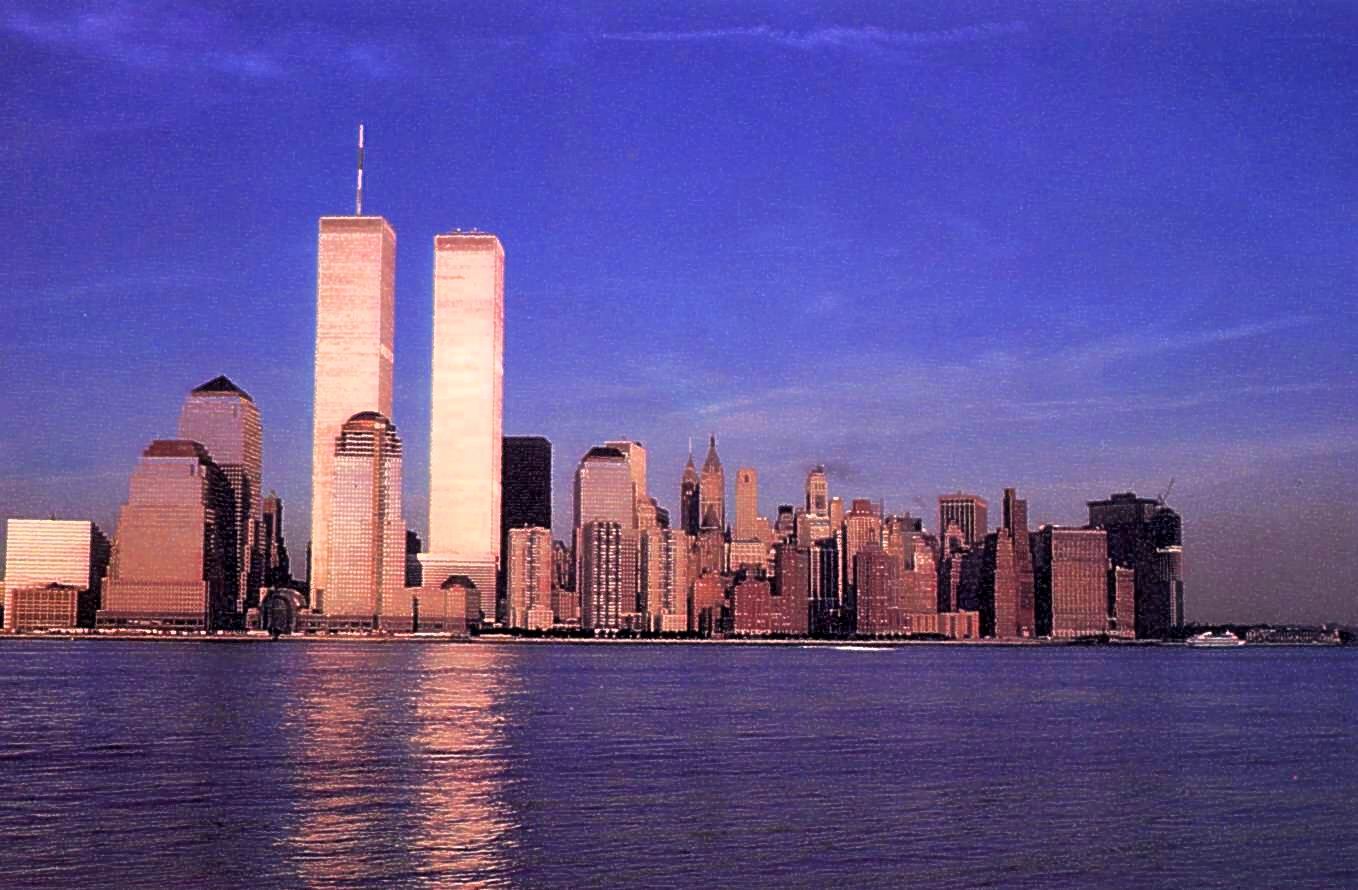
In Memoriam: 10 years later ...

It is absolutely impossible to forget:


My thoughts and prayers of Peace go out to all those whose lives were effected by the tragedy on September 11, 2001.
Related Posts Plugin for WordPress, Blogger...