Wednesday, August 31, 2011

Hurricane Irene - Weep, Shudder, Die and Kay Thompson. It's vacation time.

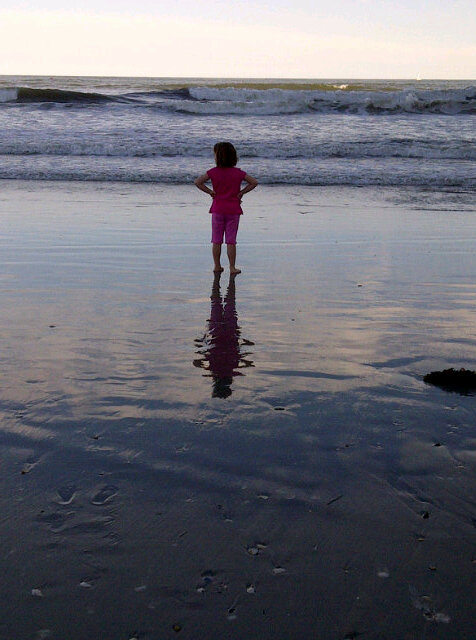
Our girl, surveying the Atlantic
The best laid plans of mice and men ... we were so ready.

Ready for our *first* family vacation - which was to take place this week in Rhode Island. It was going to be 6 days of beach time and fun in Newport ... the house was rented, the car was rented, food was purchased. We were ready.

Unfortunately, a big mama named Irene, who felt the need to share her wealth of wind and rain up the entire eastern seaboard, got in our way. The rental house was without power and restoration seemed unlikely. So, we were forced to make other plans.

Where could we go that was not only within our budget, but had vacancy on a days-ish notice? Someplace that had also been evacuated, perhaps? That's right, Ladies and Gents ... Atlantic City. Not for the shopping, not for the gambling (although, my better half does like to take her turn at the penny slots) ... but, for the beach.

I have such wonderful memories of the beach from my childhood and given that this is our first family vacation, why not make new memories at the beach with our girl?

So, here we are ... Ceasars Atlantic City. The room is nice and has a view of the beach - which is great considering our agenda: spend every waking moment we can ... on. the. beach.
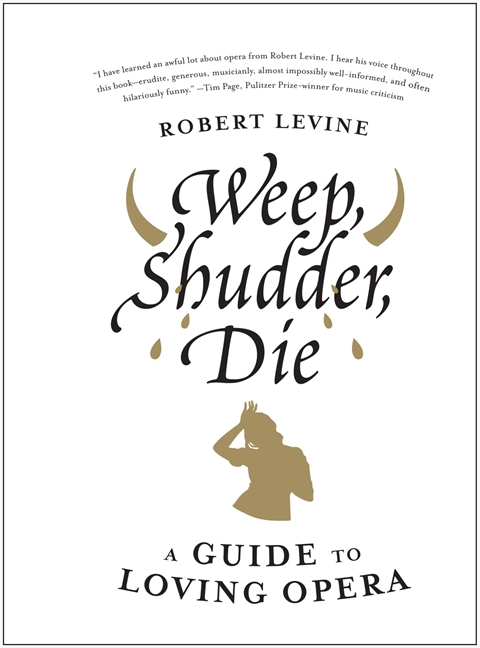
Now, when we had originally planned to go to Rhode Island, part of that plan was to get through at least two books. One of which is to be reviewed for you, and the other is just because I am intrigued by it's subject.

Billed as an insightful and accessible guide to the grand art of opera for both new and longtime fans, Weep, Shudder, Die: A Guide to Loving Opera is a book that I have been meaning to read for a quite few weeks now.

The plan being, of course, that I would review it and bring you my $.02.

And, why not?  Robert Levine uses his signature wit to examine the most famous composers and operas - from Wagner's Der Ring des Nibelungen to Mozart's Le nozze di Figaro and Tchaikovsky's Eugene Onegin, giving a sense of each opera's history and celebrating its enduring greatness.

We shall see - more to come so, stay tuned.
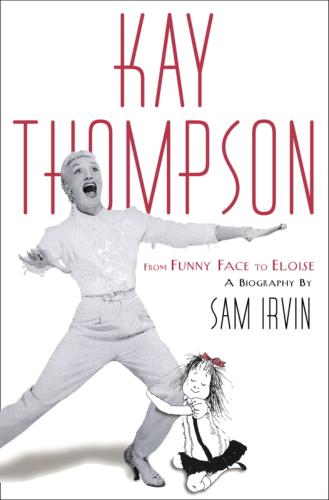
The second book I plan to read before the week is up is about an eccentric, yet genius, figure in the world of entertainment.From the jacket of Kay Thompson: From Funny Face to Eloise by Sam Irvin:
Kay Thompson’s larger-than-life story is an effervescent toast to show business with a shot of Auntie Mame and a twist of The Devil Wears Prada.

A multi-threat entertainer and a world-class eccentric, Kay Thompson was the mentor/best friend of Judy Garland, the vocal guru for Frank Sinatra and Lena Horne, and the godmother/Svengali of Liza Minnelli (who recreated Thompson’s nightclub act in her 2009 Tony Award–winning event,
Liza’s at the Palace).

She went to school with Tennessee Williams, auditioned for Henry Ford, got her first big break from Bing Crosby, trained Marilyn Monroe, channeled Elvis Presley, rejected Andy Warhol, rebuffed Federico Fellini, got fired by Howard Hughes, and snubbed Donald Trump.

She coached Bette Davis and Eleanor Roosevelt; she created nightclub acts for Marlene Dietrich and Ginger Rogers; and when Lucille Ball had to sing on Broadway, Kay was the wind beneath her wings, too.

Kay’s legion of fans included Queen Elizabeth of England, King Juan Carlos of Spain, and Princess Grace (Kelly) of Monaco. Danny Kaye masqueraded in drag as her; Noël Coward and Cole Porter wrote musicals for her; and The Beatles wanted to hold her hand. She was a charter member of the Rat Pack, costarred in a whodunit with Ronald Reagan, and directed John F. Show More

The dame cut a wide swath through the arts. After conquering radio in the 1930s she commandeered MGM’s vocal department in the 1940s, where she revolutionized the studio’s greatest musicals with her audacious arrangements, from
The Harvey Girls to Ziegfeld Follies.

In the 1950s she became the highest-paid cabaret attraction in the world with her groundbreaking act
"Kay Thompson and the Williams Brothers," featuring her young protégé—and secret lover—Andy Williams.

In a stunning feat of reinvention, Thompson next became the bestselling author of
Eloise (first published by Simon & Schuster in 1955), chronicling the mischievous adventures of the six-year-old mascot of The Plaza, spawning an industry that is still going strong today.

Then Kay took the silver screen by storm as the "Think Pink!" fashion magazine editor in
Funny Face, stealing the film right out from under Audrey Hepburn and Fred Astaire.

The Thompson saga swells from small town wannabe to international headliner, dissolving into self-destruction and madness—the storyline usually reserved for a rags-to-riches potboiler—yet with unexpected twists, outlandish turns, and a last-minute happy ending that, even by Hollywood’s standards, is nothing short of preposterous. But that is Kay Thompson. Fascinating. Frustrating. Fabulous!
Here's to fun, sun and plenty of beach time reading!

Alright, Chiclets - see you in a week or so.

Thursday, August 25, 2011

Happy Birthday to: Leonard Bernstein

Legendary composer, conductor, pianist, author and classical music celebrity Leonard Bernstein was born on this day in 1918.

Happy Birthday, Maestro!

Bernstein was born Louis Bernstein in Lawrence, Massachusetts, the son of Ukrainian Jewish parents Jennie (Resnick) and Samuel Joseph Bernstein, a hair-dressing supplies wholesaler from the Ukraine. His grandmother insisted that his first name be Louis, but his parents always called him Leonard, because they liked the name more. When Bernstein was 15, he officially had his name changed to Leonard.

Best known to the public as the longtime music director of the New York Philharmonic, Bernstein also conducted many other of the world's leading orchestras during his career.

Bernstein composing | 1968
As a composer, Bernstein is probably best known for writing the music for West Side Story, Candide, Wonderful Town, and On the Town. In 1952, Bernstein wrote a 1 act opera called Trouble in Tahiti for mezzo soprano, baritone and a greek chorus type trio of "radio singers". In 1983, Bernstein wrote a sequel to it called A Quiet Place. In it's original form, A Quiet Place was also a 1 act opera which was followed by Trouble in Tahiti after an intermission.

When the original version of the paired 1 acts premiered at Houston Grand Opera, the show was smacked down in the press. In fact, the New York Times said "To call the result a pretentious failure is putting it kindly". Bernstein and librettist Stephen Wadsworth subsequently pulled the show and began revising it. In the revision process, they cut many scenes and folded Trouble in Tahiti into A Quiet Place as a flashback sequence.

Last season at NY City Opera, I had the chance to see A Quiet Place and I am of the opinion that it should have a place on more stages. But, being that the show is very much a musical theater piece sung operatically, I can understand why some people are confused as to how, where and when it should be produced. Regardless, it should be produced - the story is poignant and the music is ... well ... it's Bernstein. Need I say more?

To call Bernstein a legend is a severe understatement. He was not only a legend, but also truly a lover of and advocate for all kinds of music, as well as a member of that very first class of major celebrities from the classical music world.

As with many legends, it seems that we lost Bernstein to early. He conducted his final performance at Tanglewood on August 19, 1990, with the Boston Symphony playing Benjamin Britten's Four Sea Interludes from Peter Grimes, and Beethoven's Seventh Symphony. A life long smoker - he had battled emphysema from his mid-50s - this final performance stretched him to the brink and he suffered a coughing fit in the middle of the Beethoven. The concert nearly ended - quite abruptly.

On October 14, 1990, Leonard Bernstein died of a heart attack caused by progressive lung failure - just five days after announcing his retirement. According to his Wikipedia page, on the day of his funeral his procession slowly moved through the streets of Manhattan where some construction workers removed their hats and waved, yelling "Goodbye, Lenny."

Bernstein is buried in Green-Wood Cemetery, Brooklyn, New York.

For your viewing ... Leonard Bernstein displays his fiery conducting style as he conducts the final movement of Verdi's Requiem. Soprano Martina Arroyo is the soloist.

Wednesday, August 24, 2011

Another's Turn - Jade Simmons: Charity Ain't So Sweet After All

Ladies and Gents, I am thrilled to introduce you to our first guest blogger here at A Liberal's Libretto.

Jade Simmons is positively versatile. She effortlessly flows between classical and cutting edge, performing and speaking, writing, designing and producing without skipping a single beat [pun intended]. A true renaissance lady of the millennium, Jade's many projects and performances are aimed at broadening the boundaries of classical music and pushing the cause for great music overall.

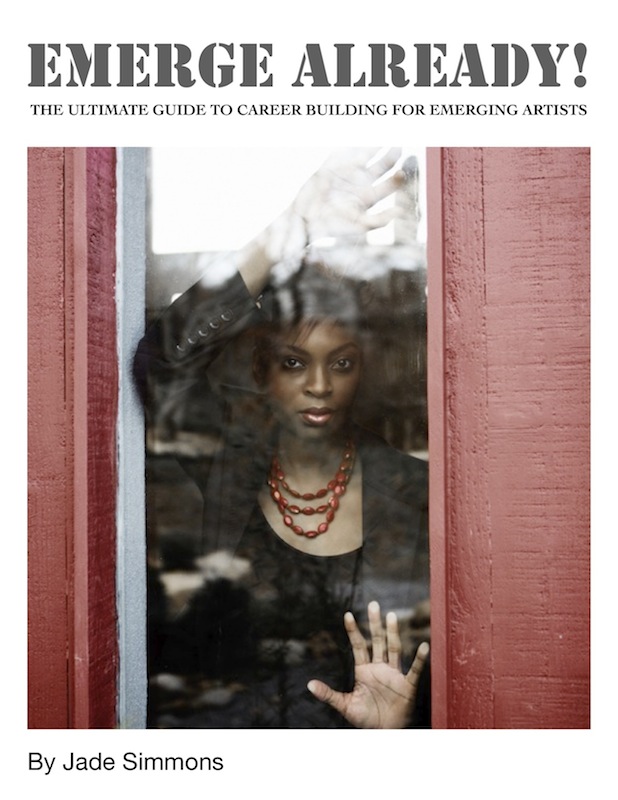
Now, this multi-faceted superwoman brings you her first e-book: EMERGE ALREADY! The Ultimate Guide to Career Building for Emerging Artists. This tell all covers everything including carving your niche, marketing, creating package deals, approaching management, what presenters really think and how not to get re-engaged. Just for you, my Chiclets, Ms. Jade has provide a coupon code - TB83V ... and, let's be honest - who doesn't love a good coupon code? So, go on ... get your copy.

Now, without further jaw-flapping from Yours Truly, I give you Jade Simmons:


Charity Ain’t So Sweet After All
By Jade Simmons - A Liberal's Libretto Guest Blogger

Artists, look down! Those are called bootstraps.

First, let me say that I can’t think of another group accustomed to hustling more than artists. We’ll starve for our art, make art out of nothing and perform in the subway station if we have to. We’ll teach even if we don’t like teaching, perform in venues that are less than divine or even wait tables if it means one more day of chasing our dream. But the one thing that we still seem hesitant to do is ask this one question:

“What would it look like if art-making was never, ever disproportionately dependent on charity?”

It’s got to be hard to imagine because, in my opinion, the patron-artist model has crippled us since the beginning. It’s pretty much the only model we know. As a result, many of us still wait for that elusive King to come bestow his court and his money. Lack of funding for the arts is nothing new. Even back then the artist was at the mercy of his benefactor’s whims. When the next, young, titillating wunderkind rolled into town we found ourselves out on our talented butts once again. The image of the poor, disheveled artist was, and still is, a prominent one. He was never expected to make money, or be good with handling it. He was only expected to be marvelous. And this role he accepted with glee, content to spend his days playing to his heart’s content and performing at the King’s request. But what are the costs?

We are seeing those costs today. Artists are coming out of schools glazed over like virtuosic zombies, wholly expecting to be swooped up on tour by a famous conductor or, worse yet, they’ve already bought into the myth that there is no room for them on the stage. It’s never occurred to them to build their own stage. In 2011, on the heels of drastic funding cuts for the arts, some of our top music schools are just now making more than a half-hearted effort to add entrepreneurial programs for their students. That way at least they will be able to write an effective bio before they march across that other stage, diploma in hand. Arts organizations in many ways suffer the most from a lack of business savvy as they hand their entire seasons over to well-meaning donors whose deep pockets entitle them to a big say in the brand of the organization. The mantra? The Classics, the Classics and nothing but the Classics. This is great for the donors, their friends and an ever-shrinking traditional audience. But if we keep marching out predictable program we’ll fill our halls with predictable audiences, not new ones. There’s nothing wrong with traditional programming that appeals to traditional classical music audiences. But if we limit ourselves to that, we look less and less appealing to funding from the government who does not feel the need to spend money on something that apparently only effects a small privileged demographic. If we want new blood in the seats we have to offer new experiences, but we can’t always do that when our boards are scared to death of change.

Now, I’m not naïve, I know that the lack of government funding is not about artistic programming. But investments in general are made for two reasons:
  1. There’s a noted and powerful impact on a large group that would come from the product being invested in.
  2. There’s money to be made.
Unfortunately, for many, the arts have not proven to be that product. We can either fix items 1 and 2 and go back to the government with new proposals in hand or we can decide that we’re personally going to look at new, innovative ways to make an impact AND make money in our own communities, to the point where we do not need so much outside help. If small businesses across this country have found ways to fill niches and make a profit, so can we.

Am I against government funding for the arts? Heck no. Am I against patronage and private donors? Heck no. I run a 501c3 so I know firsthand the importance of those resources. But am I against blind dependency on outside funding, the kind that causes us to spend more time making “asks” then daring to ask ourselves how can we run our artistic projects more like artistic enterprises? You bet I am! We have to ask ourselves how we can we be more like a business and less like a woe-is-me charity?

Of course, apply for grants and let your politicians know how important arts funding is to you and your surrounding community. But while you’re petitioning, petition your local arts organizations to start genuinely mixing things up and petition yourself to learn to market yourself like an artistic product complete with a business plan. And for the love of Mozart, never let yourself be beholden to any King’s court. Proactivity and self-sufficiency along with creative collaborations with like-minded artists are the keys to an artfully successful future.

Tuesday, August 23, 2011

The Martin Luther King Jr. Memorial - Washington DC

Photo by: Charles Dharapak / Associated Press
After some 25 years in the making the Martin Luther King Jr. memorial has opened to the public in Washington D.C.

From The Washington Post
The first members of the public to see the official opening of Washington’s new $120 million memorial to the Rev. Martin Luther King Jr. walked in quietly, smiling but “so slow it was like we were coming to see a body,” said Weldon Ferguson of the District.

What they saw instead was stone and water, words and an iconic image on a picture-perfect summer day along the Tidal Basin.

Some were weeping. Others were taking pictures of the statue and each other and giving high-fives, lending the unveiling of the memorial the feeling of one big block party.

“It’s beautiful, exquisite,” said Paulette Davis of Washington. “I’m remembering where he led us. This exceeded my expectations.”
For those of us who contributed to this memorial in order to pay tribute to a man whose journey changed the lives of so many people, this is a proud moment.

Wednesday, August 17, 2011

New York opera fans: shut down and feeling insulted

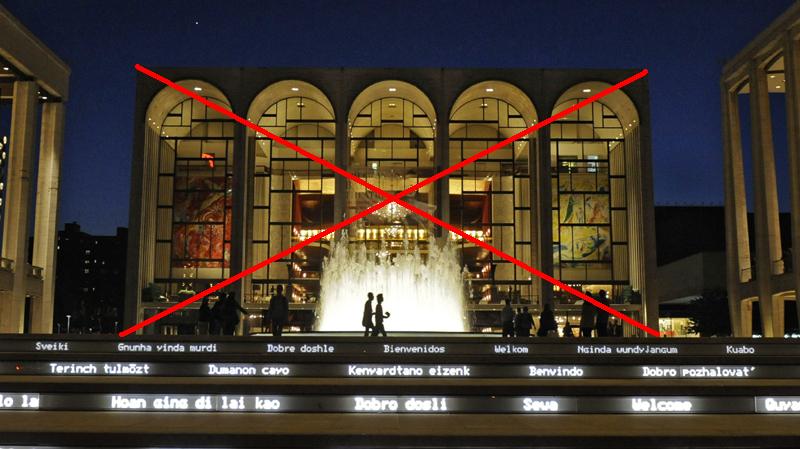
As was discussed yesterday, the Met proved that all of it's "we're cutting-edge ... we're 21st century" messaging is just that - messaging. In other words, they're not acting very "21st century" when they corner a blogger and intimidate him into shutting down his 15 year old labor of love. All because sometimes the site "contains errors"; and because it apparently "muddied negotiations with artists".

The Met doesn't seem to understand that in this age of new media - a time when traditional marketing, public relations and advertising have given way to the influences of social media and bloggers - you should never bite the hand that feeds you.

So, you have the Met biting one hand and City Opera chewing off their arms. And, the City Opera drama continues.

Our Mommy Dearest, La Cieca, reported yesterday that she was copied on a letter sent by what she terms a "long-time patron of NYCO" in response to City Opera's Subscription Renewal Brochure. A portion of that letter reads:
I have always been a rather thrifty and low-end tickets buyer. When a certain amount of money is available, I like to get the largest number of performances, and have never felt I was missing much by sitting in the fourth or even fifth ring. My first Sills Manon was a one dollar ticket in the fifth ring of a sold out performance. No problem. Everything came across to my satisfaction.

Last year, my fourth ring subscription tickets came to (I believe) 12 dollars per seat. I saw all the operas, as well as the additional “concerts” and although I was not quite wild about everything, the City Opera has long provided an incentive to see unusual things at a reasonable price. I would not be in a hurry to see any of them again, but I don’t regret having seen them once. Even Seance on a Wet Afternoon, which, if little else, had interesting and committed performances.

This year, it appears that the least expensive ticket will be $60. Or $48 if one chooses to attend all four and get the discount. I’d say that is quite a jump.

In addition, I suspect that traveling from the Bronx to and from BAM ( although I have done it on very special occasions) might be a bit more than I want to undertake for Rufus Wainwright’s Prima Donna or Jonathan Miller’s take on Traviata. To speak of BAM, John Jay and El Museo as “curated venues” (whatever that actually means) strikes me as a bit euphemistic. And as for the “specially-curated subscription series,” well that strikes me as a bit too much “curating” to be claimed in one letter.

In short, I feel quite insulted by your brochure. The extremely offhand and casual way you present a 400% or 500% ticket price increase and a move to what seem like rather substandard (however “curated”) venues is especially insensitive.
According to The New York Times, City Opera's George Steel is taking it all in stride:
"I manage for the future. If I have to take tomatoes from here to there, I can live with that."
That's all well and good, Mr. Steel - but, sooner or later, the future becomes the present. When it does, something tells me you'll be singing a different tune when you're still being pelted by the tomatoes.

Stay tuned, Chickpeas - I'm sure there will be more to come.

Tuesday, August 16, 2011

Metropolitan Opera to "Met Futures" blogger: Shut it down.

Bloggers beware! It seems that the general counsel at the MET has cornered one of my blog-eagues into taking down his 15 year old blog. No joke, Chiclets!

Zachary Woolfe writes for The New York Observer:
...Since 1996 Brad Wilber, a reference librarian and crossword puzzle enthusiast, has published Met Futures, an online list of repertory and casting for upcoming seasons at the Metropolitan Opera. Drawing on information in the public domain and tips from sources, it’s a valuable, dependable, much-loved resource, providing a wide-angle view of the Met’s artistic direction and singers’ choices. (Anna Netrebko is singing her first-ever Tatyana in Eugene Onegin in 2013-14! La Donna del Lago has its Met premiere two years after that!)

This being opera, the list has also been the fodder for gleeful gossip, with a small but influential readership. Its updates have been regularly picked up by other blogs, and Peter Gelb, the Met’s general manager, has referred to it in interviews.

In May, Mr. Wilber was contacted by the Met for the first time. He received a phone call from Sharon Grubin, the company’s general counsel, who asked Mr. Wilber to take down Met Futures. Though Mr. Wilber, 41, has long included a disclaimer on the site (“Keep in mind that although I try to post only solid information, the information should always be treated as merely speculative. I am in no way affiliated with the Metropolitan Opera”), the Met didn’t think it went far enough.

“She said their uppermost reason was that the site contains errors,” he said in a phone interview last week from his office at Houghton College, a small liberal arts school about 60 miles southeast of Buffalo, “and those errors, whatever percentage, create mistaken expectations on the part of the public, even with my disclaimer. And that it also sometimes muddied negotiations with artists. They said that that created difficulty for them.” ...

... The list never included Mr. Wilber’s own speculations, and he was diligent about adjusting incorrect information. “I made pretty sure that I didn’t put up something that I hadn’t seen in print or on a website or in a direct communication,” Mr. Wilber said. “I never ever put any guesswork or assumptions on there.”

But Mr. Wilber agreed to remove the list, which he did early last week. “I’m not by nature an especially subversive person,” he said. “And I always told myself that if it got to the point where the Met expressed concern I would take it down.”

Representatives from the Met’s communications department offered him some CDs, which he accepted, and they spoke with him about the tone and content of his farewell post. (In response to an interview request, the company released a statement: “The Met asked Mr. Wilber to please stop providing unconfirmed information about future seasons, and he agreed.”) ...

...Hopefully Mr. Wilber will reconsider his decision and put his list back online. But even if he doesn’t, I spoke with other bloggers who expressed interest in hosting a similar feature. It would be deeply unfortunate if the Met attempted to pursue such a weak case against any of these people, who would almost certainly lack the company’s legal and financial resources. The fact that the company cannot seem to control leaks of information, to Mr. Wilber and others, is not the bloggers’ problem. It’s the Met’s. ...

... “If the departure of the Met Futures list leaves you missing it,” he said in the farewell post on his site, “I’m sorry about that. I will really miss it too, you can be sure. But I plan to continue offering the Met all my usual forms of support — attending performances in the house, going to the cinema for live-in-HD presentations, listening via radio, etc. I hope you’ll do the same."
I encourage you to check out the article in it's entirety at The New York Observer website. Also, make sure to follow Zachary Woolfe on Twitter @zwoolfe.

And, to Mr. Wilber: I have always had the highest regard for the Met Futures list and for your work in aggregating information. You are welcome to post here anytime - just visit my Contact page and let's get the ball rolling!

Wednesday, August 10, 2011

Stephen Sondheim: the new 'Porgy and Bess' has got plenty of nothin'

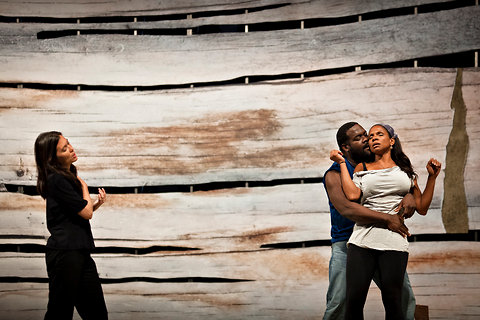
Diane Paulus rehearses with Phillip Boykin and Audra McDonald
As we all know by now, there’s a new version of Porgy and Bess with Audra McDonald and Norm Lewis in the works - one that, as The New York Times puts it:
... seeks to transform the classic 1935 opera into a commercial Broadway musical. To that end, the director Diane Paulus and the playwright Suzan-Lori Parks have added new scenes, punched up some dialogue, invented biographical details and — most radically — added a more upbeat ending.
Well Kidlets, Mr. Stephen Sondheim isn't so pleased about the prospect ... and Mr. Send-in-the-clowns is making sure we all know how he feels by sending a letter to the editor to The Times:
The article by Mr. Healy about the coming revival of Porgy and Bess is dismaying on many levels. To begin with, the title of the show is now The Gershwins’ Porgy and Bess. I assume that’s in case anyone was worried it was the Rodgers and Hart Porgy and Bess that was coming to town. But what happened to DuBose Heyward? Most of the lyrics (and all of the good ones) are his alone (“Summertime,” “My Man’s Gone Now”) or co-written with Ira Gershwin (“Bess, You Is My Woman Now”). If this billing is at the insistence of the Gershwin estate, they should be ashamed of themselves. If it’s the producers’ idea, it’s just dumb. More dismaying is the disdain that Diane Paulus, Audra McDonald and Suzan-Lori Parks feel toward the opera itself.

Ms. Paulus says that in the opera you don’t get to know the characters as people. Putting it kindly, that’s willful ignorance. These characters are as vivid as any ever created for the musical theater, as has been proved over and over in productions that may have cut some dialogue and musical passages but didn’t rewrite and distort them.

What Ms. Paulus wants, and has ordered, are back stories for the characters. For example she (or, rather, Ms. Parks) is supplying Porgy with dialogue that will explain how he became crippled. She fails to recognize that Porgy, Bess, Crown, Sportin’ Life and the rest are archetypes and intended to be larger than life and that filling in “realistic” details is likely to reduce them to line drawings. It makes you speculate about what would happen if she ever got her hands on
Tosca and Don Giovanni. How would we get to know them? Ms. Paulus would probably want to add an aria or two to explain how Tosca got to be a star, and she would certainly want some additional material about Don Giovanni’s unhappy childhood to explain what made him such an unconscionable lecher.

Then there is Ms. Paulus’s condescension toward the audience. She says, “I’m sorry, but to ask an audience these days to invest three hours in a show requires your heroine be an understandable and fully rounded character.” I don’t know what she’s sorry about, but I’m glad she can speak for all of us restless theatergoers. If she doesn’t understand Bess and feels she has to “excavate” the show, she clearly thinks it’s a ruin, so why is she doing it? I’m sorry, but could the problem be her lack of understanding, not Heyward’s?

She is joined heartily in this sentiment by Ms. McDonald, who says that Bess is “often more of a plot device than a full-blooded character.” Often? Meaning sometimes she’s full-blooded and other times not? She’s always full-blooded when she’s acted full-bloodedly, as she was by, among others, Clamma Dale and Leontyne Price. Ms. McDonald goes on to say, “The opera has the makings of a great love story … that I think we’re bringing to life.” Wow, who’d have thought there was a love story hiding in
Porgy and Bess that just needed a group of visionaries to bring it out?

Among the ways in which Ms. Parks defends the excavation work is this: “I wanted to flesh out the two main characters so that they are not cardboard cutout characters” and goes on to say, “I think that’s what George Gershwin wanted, and if he had lived longer he would have gone back to the story of
Porgy and Bess and made changes, including the ending.”

It’s reassuring that Ms. Parks has a direct pipeline to Gershwin and is just carrying out his work for him, and that she thinks he would have taken one of the most moving moments in musical theater history — Porgy’s demand, “Bring my goat!” — and thrown it out. Ms. Parks (or Ms. Paulus) has taken away Porgy’s goat cart in favor of a cane. So now he can demand, “Bring my cane!” Perhaps someone will bring him a straw hat too, so he can buck-and-wing his way to New York.

Or perhaps in order to have her happy ending, she’ll have Bess turn around when she gets as far as Philadelphia and return to Catfish Row in time for the finale, thus saving Porgy the trouble of his heroic journey to New York. It will kill “I’m on My Way,” but who cares?

Ms. McDonald immediately dismisses any possible criticism by labeling anyone who might have objections to what Ms. Paulus and her colleagues are doing as “Gershwin purists” — clearly a group, all of whom think alike, and we all know what a “purist” is, don’t we? An inflexible, academic reactionary fuddy-duddy who lacks the imagination to see beyond the author’s intentions, who doesn’t recognize all “the holes and issues” that Ms. Paulus and Ms. McDonald and Suzan-Lori Parks do. Never fear, though. They confidently claim that they know how to fix this dreadfully flawed work.

I can hear the outraged cries now about stifling creativity and discouraging directors who want to reinterpret plays and musicals in order to bring “fresh perspectives,” as they are wont to say, but there is a difference between reinterpretation and wholesale rewriting. Nor am I judging this production in advance, only the attitude of its creators toward the piece and the audience. Perhaps it will be wonderful. Certainly I can think of no better Porgy than Norm Lewis nor a better Bess than Audra McDonald, whose voice is one of the glories of the American theater. Perhaps Ms. Paulus and company will have earned their arrogance.

Which brings me back to my opening point. In the interest of truth in advertising, let it not be called
The Gershwins’ Porgy and Bess, nor even The Gershwin-Heyward Porgy and Bess. Advertise it honestly as Diane Paulus’s Porgy and Bess. And the hell with the real one.
Mr. Sondheim's point is a point well taken.

[Photo courtesy of Chad Batka for The New York Times]

Thursday, August 4, 2011

NY City Opera: "...it doesn’t make sense for us to have a music director.”

Maestro George Manahan | City Opera's Former Music Director
“My respect, admiration and love for these incredible musicians is unending,” he added, “so naturally I am saddened that the new vision for the company’s future does not include a role for a music director. But I also believe in the importance of City Opera to New York and to the rest of the country in its continuing mission of nurturing new talent and presenting exciting productions to its audiences. I look forward to a new chapter of my relationship with the company as a guest conductor and am excited to return to work with New York City Opera in future seasons.” - FORMER Music Director of NY City Opera, George Manahan
That's right, Chiclets - I said *former* music director. After 15 years as the company's Music Director, the New York Times has reported that the post is being eliminated and Maestro Manahan has been relegated to the position of guest conductor.
“George was unfortunately not able to conduct for us next season,” Mr. Steel said in a telephone interview on Tuesday. “He didn’t have the dates free, partly no doubt because we were so late in planning our season.”

The formulation and the announcement of the new season were delayed repeatedly as the company grappled with chronic budgetary woes and the logistical difficulties of extricating itself from Lincoln Center and taking the show permanently on the road. There are still major employment and pay issues under negotiation with various unions.

Mr. Manahan’s unavailability, Mr. Steel said, illuminated another matter for him, that “given the size of the company now, it doesn’t make sense for us to have a music director.”

“I don’t like saying these things together,” Mr. Steel added, “since they are really not related to each other. We are working very hard to get George back to conduct as soon as possible.”
So, Mr. Steel ... what's next? Cutting the singers and just showing the Met's Broadcasts? At this point, you might as well.

Tuesday, August 2, 2011

2011 Opera News Awards Honorees Announced

Alrighty Chickpeas, I have just received word that a date has been chosen for the seventh annual Opera News Awards - Sunday, April 29 at The Plaza in New York City. Created in 2005 in part as a benefit gala for the education programs of the Metropolitan Opera Guild, the Opera News Awards recognize five individuals each year for distinguished achievement in the field of opera.

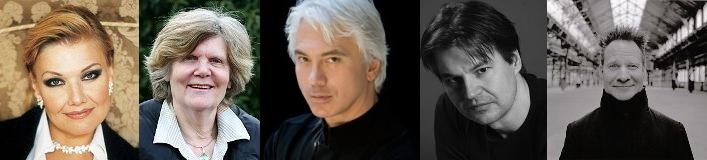
This year, the ONAs pay tribute to five artists who have made an invaluable contribution to the art form: sopranos Karita Mattila and Anja Silja, baritones Dmitri Hvorostovsky and Peter Mattei, and director Peter Sellars.


The official announcement of this year’s honorees appears in the September 2011 issue of Opera News, which is available on August 4 and features baritone Mariusz Kwiecien – the Metropolitan Opera’s new Don Giovanni – on its cover. All of the winners will be present at the gala awards dinner, which will feature celebrity presenters speaking about the awardees and introducing video performance clips. The April 2012 issue of Opera News will feature tributes to the five awardees, all distinguished members of the international operatic community.

Now ... if only Yours Truly could only get a Press Ticket to the event. Hmmmm...

Anyhoo, Editor in Chief, F. Paul Driscoll says about the event:
Once again, the editors of Opera News take pride in celebrating the achievements of an extraordinary quintet of honorees. These five incomparable artists have enriched and inspired us all. It will be a privilege to welcome them to the Opera News Awards gala on April 29.
As you probably already know, previous Opera News Awards honorees include:
2005: James Conlon, Régine Crespin, Plácido Domingo, Susan Graham, Dolora Zajick
2006: Ben Heppner, James Levine, René Pape, Renata Scotto, Deborah Voigt
2007: Olga Borodina, Stephanie Blythe, Thomas Hampson, Leontyne Price, Julius Rudel
2008: John Adams, Natalie Dessay, Renée Fleming, Marilyn Horne, Sherrill Milnes
2009: Martina Arroyo, Joyce DiDonato, Gerald Finley, Philip Glass, Shirley Verrett
2010: Jonas Kaufmann, Riccardo Muti, Patricia Racette, Dame Kiri Te Kanawa, Bryn Terfel
To this years honorees, we say cheers! Salute! Santé! Prost!
Related Posts Plugin for WordPress, Blogger...